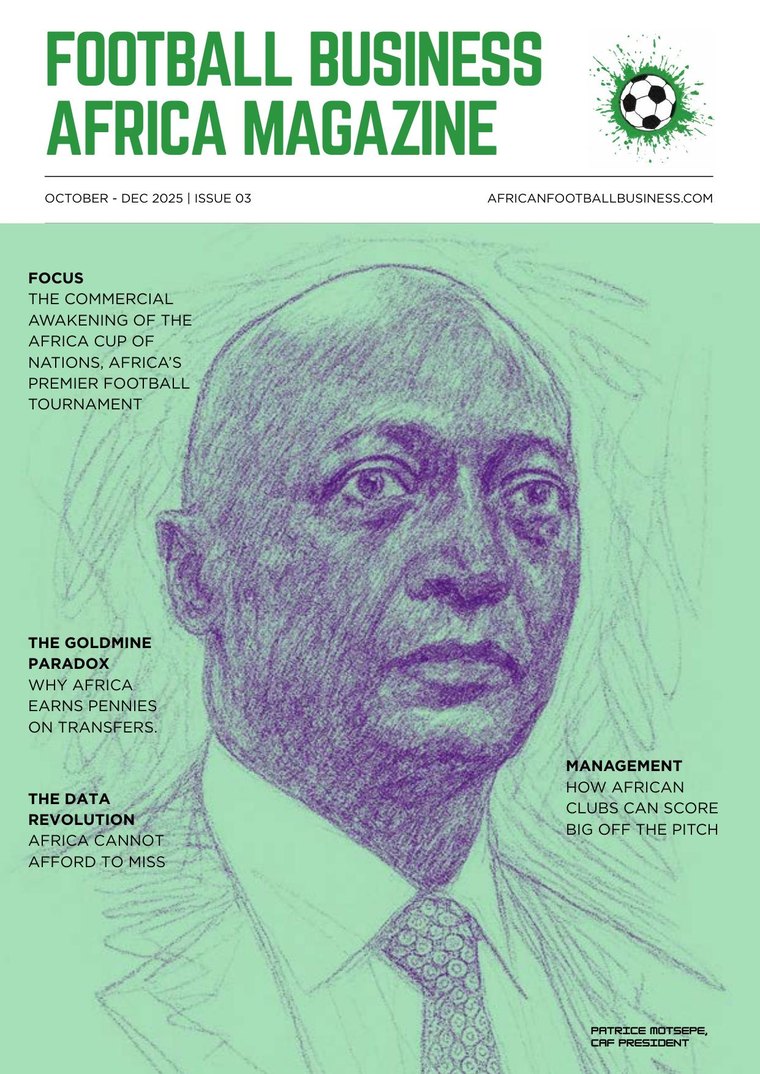
In The Green, At Last
For years, African football bled money. Now, it's finally in the black. As 24 nations descend on Morocco for AFCON 2025, the real story isn't just who lifts the trophy — it's the $9.48 million profit that signals a commercial awakening. Can it last beyond the final whistle?
The air in the conference room in Kinshasa was stale, but the figures projected on the screen were fresh—and for the first time in years, they were written in black ink, not red.
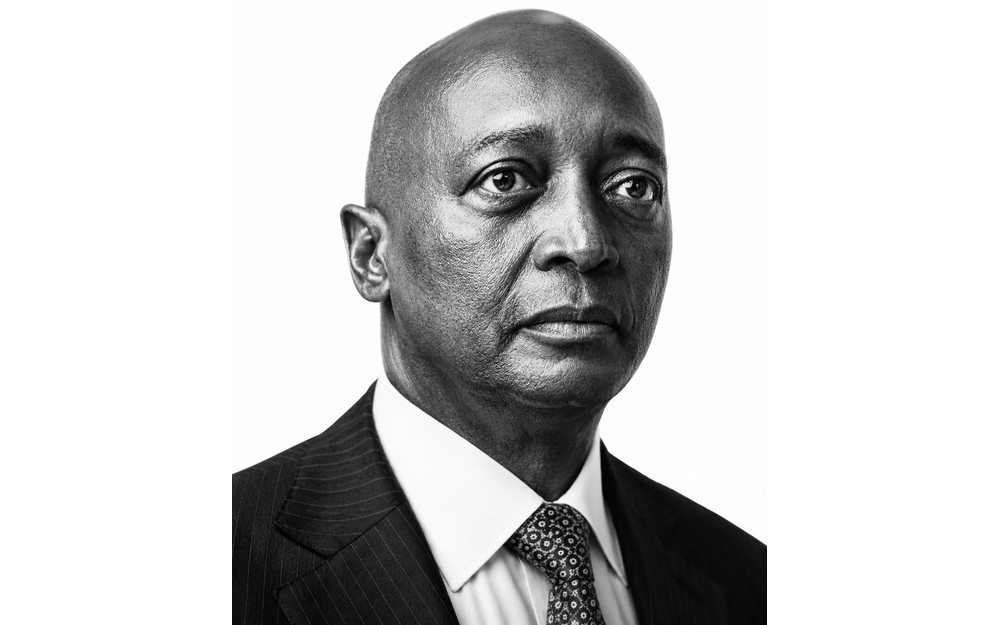
Patrice Motsepe didn't smile. The South African billionaire, often seen beaming in photo ops with dignitaries, wore the look of a man who had just balanced a very precarious scale. "We have been enormously successful," he told the 47th CAF Ordinary General Assembly this past October.
It was a statement that might have been dismissed as bluster three years ago. But this time, he had the receipts.
For years, the Confederation of African Football (CAF) was an organization defined by its deficits—a "cash-poor" giant sitting on a goldmine of talent.
Yet, just days before the opening whistle blows in Morocco for the 2025 Africa Cup of Nations, the narrative has shifted. The organization has posted a $9.48 million net profit, a sharp pivot from the financial hemorrhaging of the past.
As the continent descends on Morocco, the conversation isn't just about who will lift the trophy on January 18. It is about a different kind of victory: the proof that African football is finally open for business.
The settlement with Lagardère—$50 million paid in late 2024—was painful but necessary. As Motsepe's team saw it, this was a "break fee" to regain control of the continent's commercial inventory. The strategic rationale was that the unencumbered rights could be sliced, diced, and sold for significantly more than the fixed annuity Lagardère provided.
The gamble paid off. According to CAF's audited financial statements, revenue from competitions reached $148.62 million in 2023–24, up from $75.86 million the previous year, while commercial revenue rose to $125.2 million. CAF reported roughly $72 million in net revenue from AFCON 2023 in Côte d’Ivoire, a substantial improvement on earlier editions.
The $7 Million Carrot
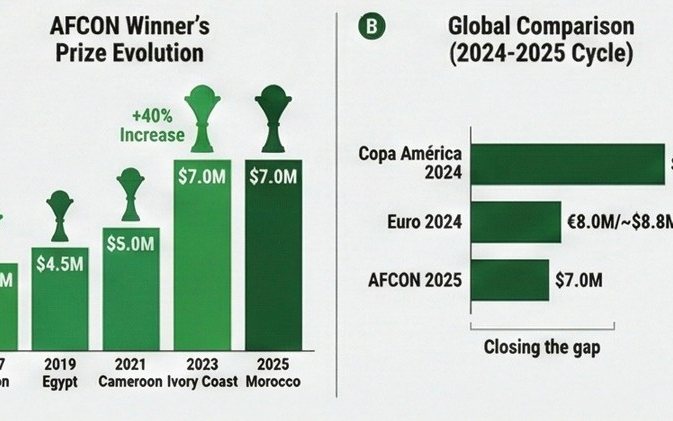
Money talks. And for the 24 federations descending on Morocco, the prize money represents more than a bonus—it is often the difference between solvency and crisis. Under the Motsepe administration, CAF has aggressively inflated the prize pot. The winner of the 2025 Africa Cup of Nations will take home $7 million—a 40% increase from the $5 million awarded at the 2021 edition in Cameroon. The total prize pot now stands at $32 million across all 24 participating nations.
Patrice Motsepe didn’t smile. But this time, he had the receipts.
Crucially, CAF has increased payouts for the lower tiers. A team eliminated in the quarter-finals now receives $1.3 million, while teams that finish third or fourth in their groups receive
$700,000 and $500,000 respectively. For a nation like Cape Verde or Mauritania, the
$700,000 guaranteed prize is a windfall that can fund the federation's youth programs for an entire year.
The increases extend beyond AFCON. The TotalEnergies CAF Champions League winners' prize money increased by 60% to $4 million. The CAF Women's Africa Cup of Nations (WAFCON) saw Nigeria, as champions, earn $1 million—double the previous edition. The overall WAFCON pool rose 45% to $3.475 million.
Context matters here. These figures, while historic for African football, still trail the riches of European competitions. The Euro 2024 winner took home €8 million ($8.8 million), while Copa América 2024 offered $18 million to its champion. But the trajectory is unmistakable—African football is closing the gap.
The Commercial Pillars
Where is the money actually coming from? The CAF 2025-2026 budget provides a clear answer: sponsorship and media rights now form the twin pillars of African football's commercial architecture.
For the 2025-2026 fiscal year, CAF projects total revenue of $312.85 million. This represents an 88% increase from the revenue for the 2023-2024
TotalEnergies: The Anchor Partner
The most critical commercial relationship in African football is with the French energy giant TotalEnergies. Initiated in 2016 and renewed in 2025 for a further four years, this partnership grants TotalEnergies title sponsorship of all major CAF competitions.
CAF’s turnaround shows that African football can convert audience, sponsorship and rights into durable commercial value.
While headline reports have circulated figures as high as $1.125 billion, conservative financial analysis suggests the direct sponsorship value is approximately $250 million to
$300 million over the four-year cycle. Even at this level, it remains one of the most lucrative sports sponsorship deals in the Global South.
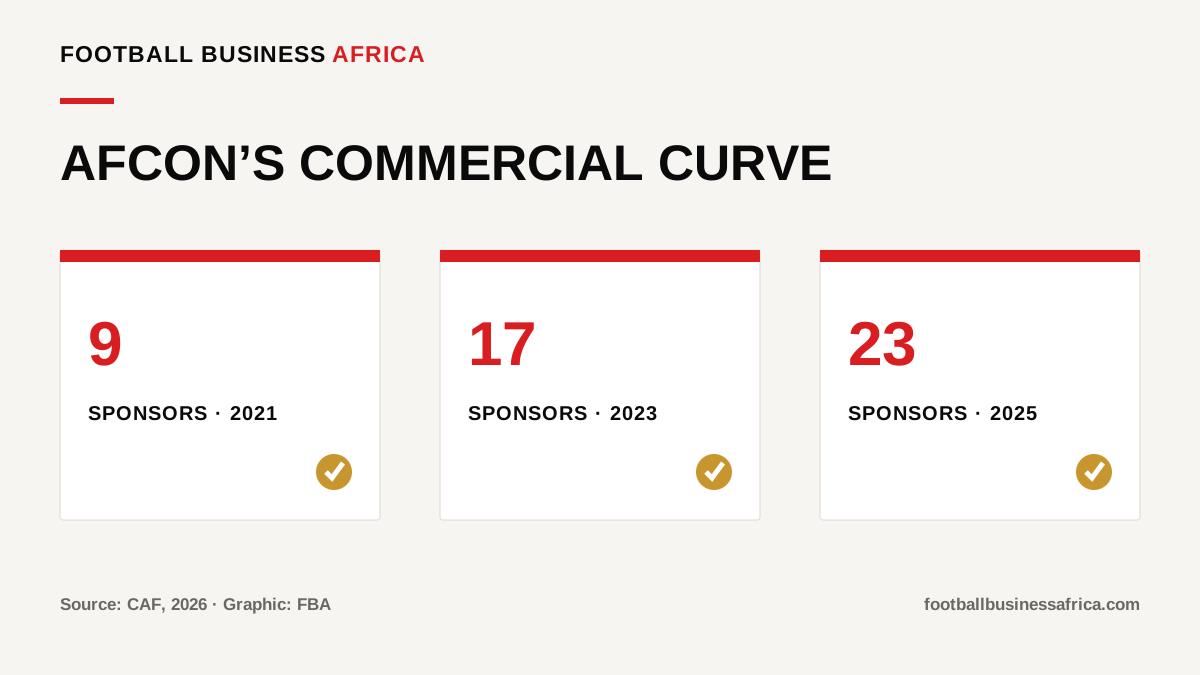
The sponsor portfolio has expanded dramatically. The number of CAF sponsors and partners grew from 10 in 2021 to 17 in 2023. Global partners now include Puma, Visa, Orange, 1xBet, Royal Air Maroc, Tecno, and the European Union. Official sponsors include QNET, Rexona, Danone, LONACI, APSONIC, Midea, AGL, and La Vache Qui Rit.
The Broadcast Revolution
If sponsorship is one pillar, broadcasting rights are the other. The 2023-2025 cycle witnessed the most dramatic upheaval in the history of African sports media. For decades, the broadcasting map of Africa was static.
MultiChoice Group (via SuperSport) dominated the English and Portuguese-speaking markets, while Canal+ controlled the Francophone territories.
In late 2023, this duopoly was shattered when CAF announced a historic agreement with New World TV (NWTV), a Togo-based broadcaster, for exclusive rights across 46 countries in Sub-Saharan Africa.
The strategy worked. By empowering a third player, CAF forced the incumbent giants into a competitive bidding war. AFCON 2023 was broadcast in 180 countries, with major deals secured with Sky Sports in the UK and Band TV in Brazil. The BBC aired select matches, driving the tournament into mainstream British cultural conversation.
For the 2025-2026 financial year, TV & Media revenues are projected at $81.2 million—a 7% year-on-year growth and a 21% increase compared to the previous AFCON year. This projected revenue is from fully signed contracts, meaning it is guaranteed.
Sources & further reading
Public documents and reporting used to verify the article. Links open the original source.
- 01
CAF Annual Report 2023–24
- 02
CAF: return to profitability
- 03
CAF: AFCON 2025 commercial growth
- 04
Reuters: AFCON revenue up 90%
Originally published in Football Business Africa, Issue 03 · Oct–Dec 2025.