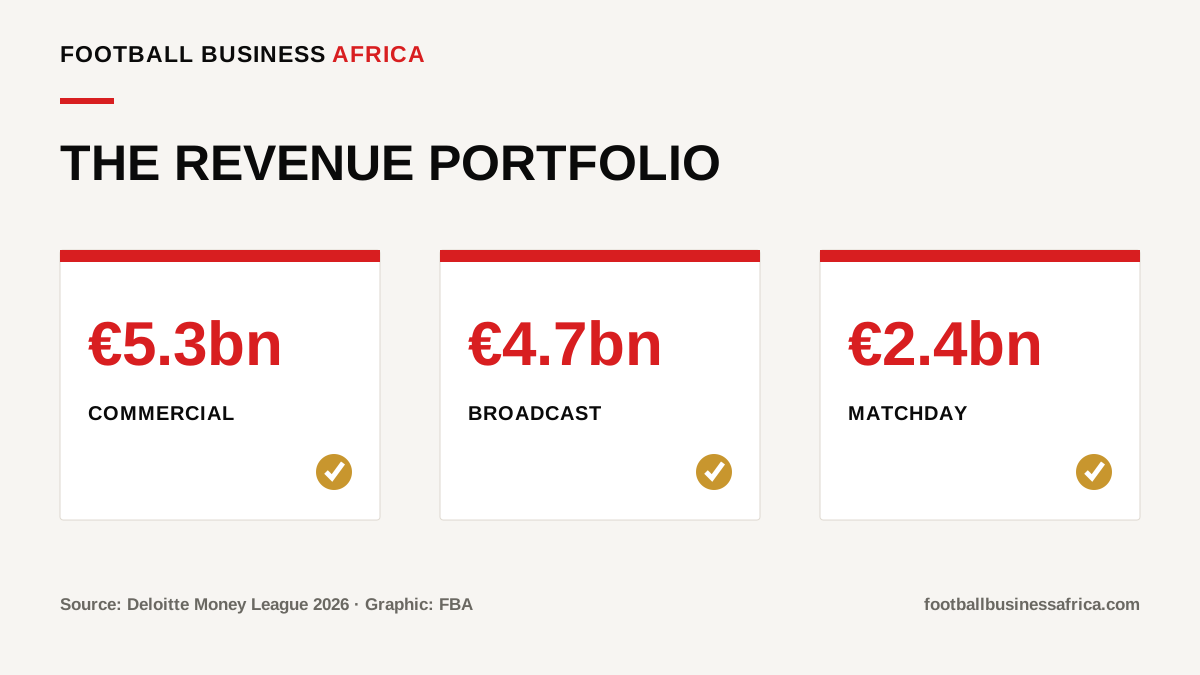
Football passion across Africa is deep, but sustainable clubs cannot depend on ticket sales alone. Oliver Wyman estimates that Africa’s sports economy is worth more than $12 billion today and could exceed $20 billion by 2035. The opportunity is real, but capturing it requires a balanced mix of commercial, media and matchday income.
Monetizing Your Football Club In 4 Steps
African clubs frequently sell top talent cheaply, losing out on future earnings. Investing in youth academies is a solution. Egypt's Al Ahly exemplifies this by winning titles while expanding its academy globally, including in the USA and Canada, to create a steady pipeline of players for profitable sales.
Matchday revenue is key.. AI-driven pricing can increase income by up to 15%. Clubs should focus on strong commercial partnerships rather than basic sponsorships, as demonstrated by Mamelodi Sundowns with brands like Puma and Hyundai, showcasing the advantages of a strong brand and success on the field.
Africa’s unique tech landscape offers a massive advantage. Live sports streaming is booming, projected to hit $87.3 billion globally by 2028. Clubs must embrace mobile-first streaming, monetize engagement and explore new tech like Esports and data monetization.
For African clubs: Invest in youth for transfers, innovate matchday tech, forge strategic partnerships, embrace digital engagement (streaming/mobile), leverage emerging tech (NFTs/esports), and prioritize fanatic loyalty.
Case Studies
ASEC Abidjan (Côte d'Ivoire)
The "Crown Jewel" The Strategy : Established the famous Académie
Gone are the days when ticket sales alone kept the lights on.
MimoSifcom in 1993 with a holistic approach, providing young players with academic education alongside elite football training.
The Result: The club has consistently produced "golden generations" of talent, including global stars like Yaya Touré, Kolo Touré, and Gervinho.
Financial Impact: The academy model has generated significant revenue over decades, with graduates accumulating over €340 million in market value wealth. They proved the model's sporting success by winning the 1999 CAF Super Cup with a team primarily composed of 17-year-olds.
The Strategy: Leveraged on-field success and strong branding to move beyond simple sponsorship deals, building deep commercial relationships with global entities.
The Result: The club has secured major partnerships with international brands including Puma, Hyundai, MTN, and even Ferrari.
Key Insight: Chairman Tlhopie Motsepe frames their approach by viewing African football not as a developing market, but as an "investment-grade opportunity".
African football is no longer a developing market — it is an investment-grade opportunity.
Case Studies
The Strategy: Investing smartly in youth academies not just domestically, but internationally to expand their brand presence.
The Result: Beyond winning titles, they have launched new academies in markets like the USA and Canada.
The Goal: To build a consistent pipeline of players that can be sold for significant fees, securing the club's financial future.
The Model: While European, these clubs are cited as the ideal financial model for African teams to emulate.
The Success: They earn hundreds of millions by selling academy graduates, a strategy African clubs are urged to replicate by negotiating "sell-on clauses" to profit from a player's future success
Sources & further reading
Public documents and reporting used to verify the article. Links open the original source.
- 01
Deloitte Football Money League 2026
- 02
Oliver Wyman: Africa’s sports economy
- 03
PwC Global Sports Survey 2024
- 04
CAF Club Licensing
Originally published in Football Business Africa, Issue 03 · Oct–Dec 2025.