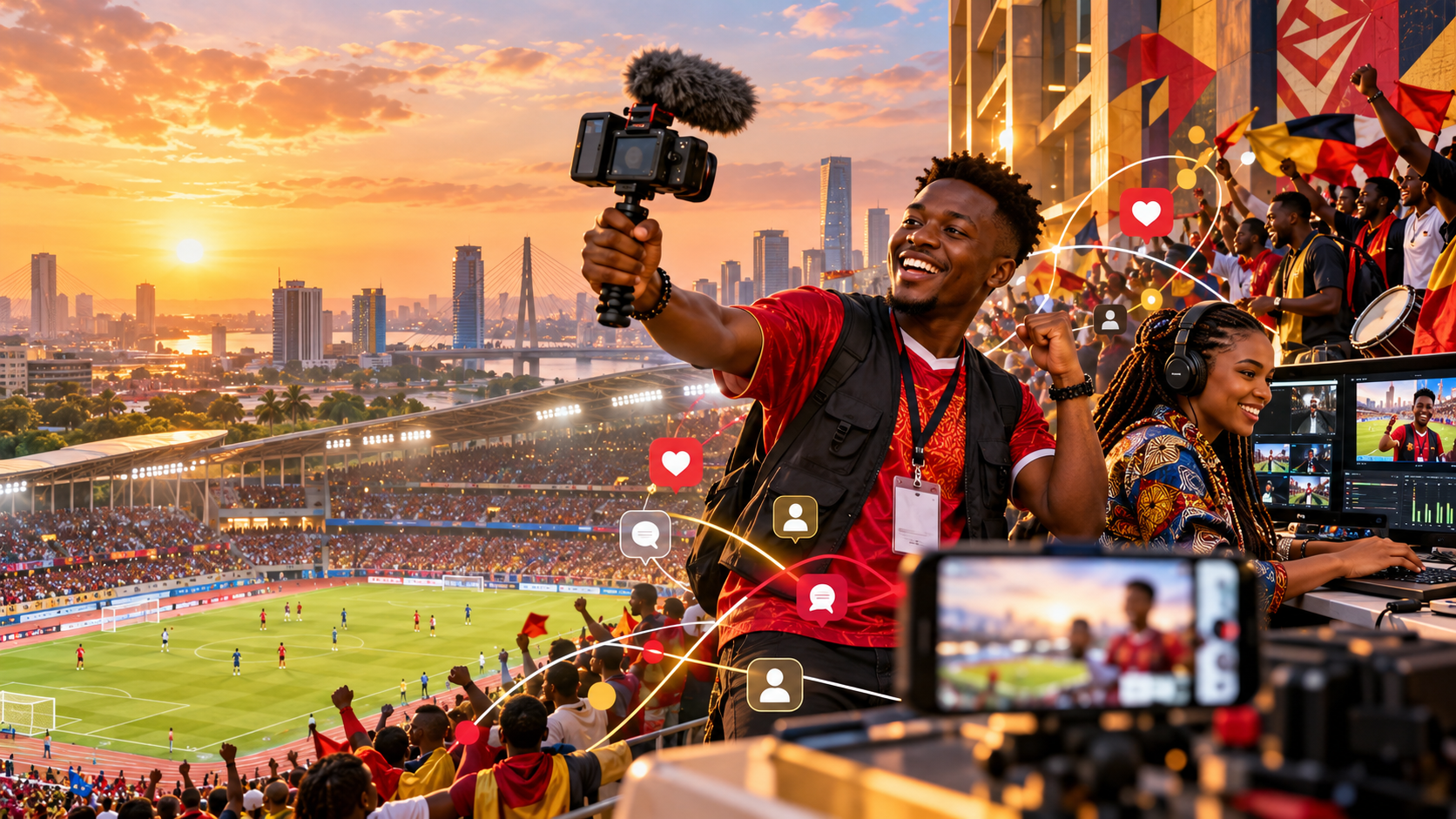
African sport used to be a broadcast-driven business. It is becoming something more dynamic: an ecosystem in which creators, athletes and platforms compete to capture — and monetise — attention.
The old model treated sport as a product distributed through airwaves. The new model treats it as a stream of content, community and attention that can be packaged and sold in many ways. That shift matters because attention is now one of the primary currencies of business — and nowhere is that truer than in sport.
Most African sports organisations still run on stadium attendance, sponsorship and traditional media. Those channels remain necessary, but they are no longer sufficient. The market is fragmented, digital and increasingly driven by creators who know how to turn a match into a story, and a story into engagement.
Creators help sports properties grow audiences, deepen fan loyalty, increase sponsor value, improve event visibility and make athletes more marketable.
Where the shift is strongest
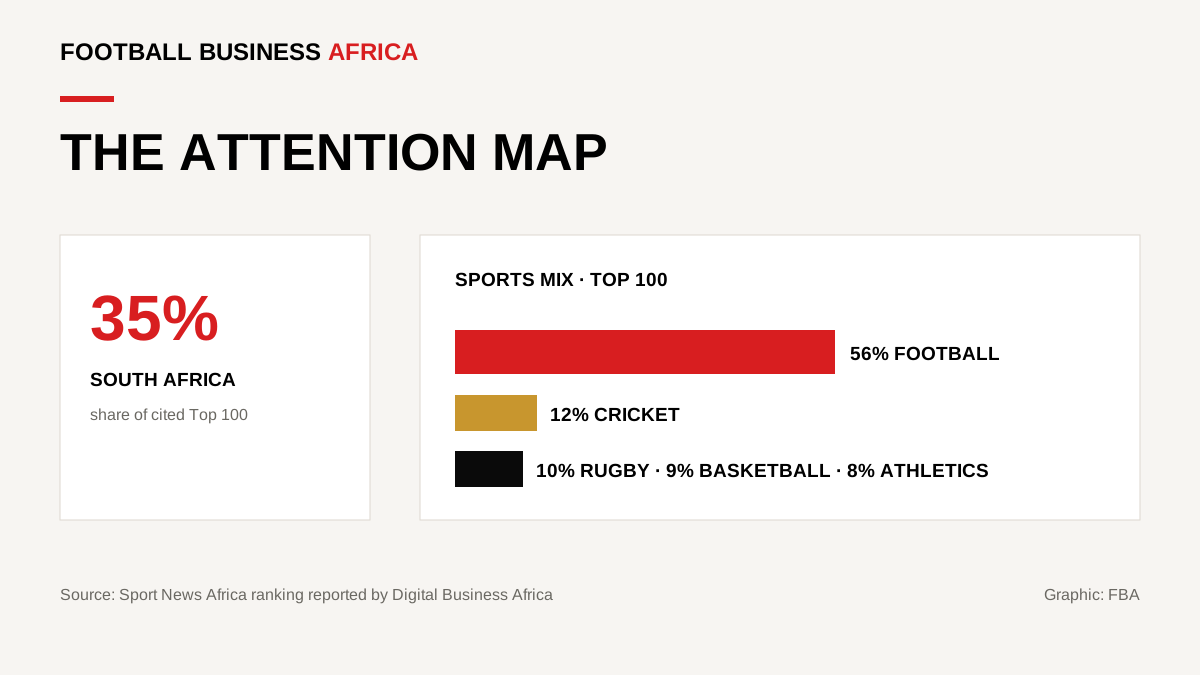
The creator economy is not evenly distributed. The most advanced markets combine large youth audiences, strong sports cultures and mature digital habits. South Africa leads in an influential-athletes ranking in which South Africans accounted for 35%, consistent with a sports profile spanning football, rugby, cricket and athletics. Nigeria is the continent’s other great attention market, with intense conversation around football, basketball and combat sports. Egypt matters through football and hyperactive social engagement, Kenya through athletics, and Côte d’Ivoire is emerging as a Francophone hub.
Why creators change the economics
Creators do not simply amplify sport; they change its economics. A creator can make a sport easier to follow, turn a player into a personality and stretch the life of an event well beyond the final whistle. Sponsors buy that value because they want engagement, not just exposure.
This matters doubly in Africa, where most sports properties must do more with less. Culturally sharp, platform-native content converts limited budgets into outsized reach. The business logic is simple: attention drives engagement, engagement drives sponsor value, and sponsor value drives revenue.
Platforms, founders and media builders
The shift is not being driven by individual creators alone. A class of African founders is building the infrastructure layer beneath them.
AfroBallers, founded by Kevin Bahun-Wilson and Elliot Ozagie, is one example: a digital platform connecting African athletes, the diaspora and a global audience across Instagram, TikTok, X, YouTube and its own channels — proof that basketball and athlete culture can become a media business, not merely a content feed.
Mchezaji points to another layer: sports technology, data and talent visibility — the systems that will discover, package and commercialise African talent. Playbook, from founder and CEO Sandrine Nzoukou, connects sports content to the investment and strategy conversation. Around them, Themba Ndlwana of Sports Media Africa, Leslie Koroma Sr. of African Sports Ventures Group and Junia Stainbank of African Sports Content Network are building the distribution and business backbone of the sector.
Alongside the ecosystem builders sit creator-led media voices. In football, Stan Diop shows how commentary can become a standalone media product. Cameroon’s InsideFoot237 spotlights under-covered player performances with analytical, conversational flair, while Passion Foot Invest interviews retired greats about everything from their exploits to their finances — honouring past generations while educating the next.
Athlete-creators complete the picture. Abdou Diallo demonstrates how players can extend the value of their image beyond the pitch, while Sébastien Bassong’s Football Business Television takes that influence into podcasting and the boardroom. These creators do more than generate views; they build recurring audience habits — the foundation of sponsorship, media-rights growth and fan monetisation.
For scale effects, IShowSpeed’s Africa tour illustrated how a single creator can trigger huge attention spikes around live sporting moments. The lesson is not to import the model wholesale, but to understand what creator attention can do when aligned with a live sporting narrative.
The revenue case
The commercial upside is already visible. The Middle East and Africa sports-streaming platform market is projected to reach about $2.37 billion by 2030. NBA Africa reported more than six million viewing hours for the 2023–24 season, nearly 90 million social video views and more than 230% year-on-year growth in YouTube video views.
None of this means every property becomes profitable overnight. It means the digital layer is becoming more valuable — translating into better sponsor pricing, stronger media packages, cheaper fan acquisition and new room for subscriptions and streaming revenue. The best-case scenario is not a sudden windfall. It is steady improvement in the economics of attention.
Collaboration, not extraction
The biggest mistake organisations can make is to treat creators as a one-off distribution tool. The stronger model is collaboration. Creators need sports organisations for access, credibility and stories. Organisations need creators for relevance, reach and cultural translation. Brands need both because sponsorship requires community, not merely visibility.
The future belongs to organisations that build creators rather than simply using them — and to creators who build audiences that care, not audiences that merely scroll.
The bottom line
Africa already has the ingredients: talent, fan passion, mobile-first audiences and a growing class of media builders. What it needs now is structure — stronger creator partnerships, better data and measurement, and more multi-sport storytelling.
The next stadium is not made of concrete. It is made of attention. Whoever learns to capture it, structure it and convert it into value will shape a more scalable African sports economy.
Sources & further reading
Public sources supporting the historical context, figures and examples in this article.
- 01
NBA Africa — increased viewership and engagement
- 02
Grand View Research — MEA sports streaming outlook
- 03
Digital Business Africa — influential athletes ranking
- 04
AfroBallers — official platform
Published by Football Business Africa · 7 October 2026.