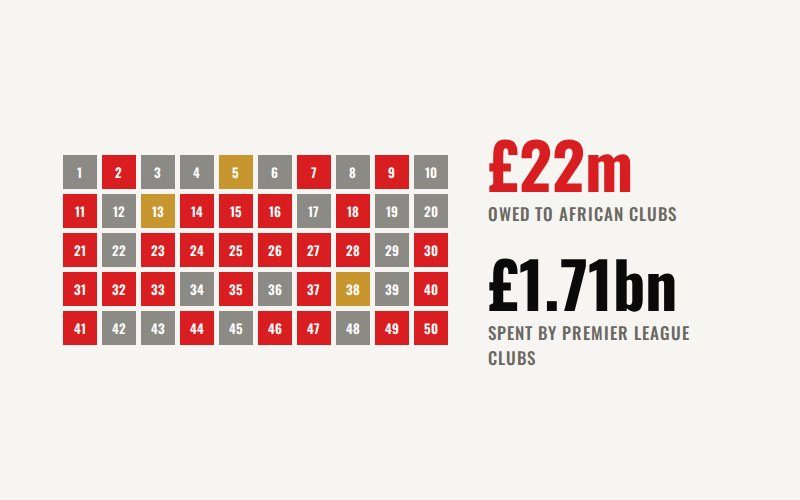
On 25 August 2026, Manchester United confirmed the signing of Carlos Baleba from Brighton for £65 million, with up to £5 million more in add-ons. The Cameroon midfielder was born in Douala and joined the École de Football des Brasseries du Cameroun at 13. He left for Lille in January 2022, days after his 18th birthday. If any transfer should send money home to Africa, it is this one.
Now follow the money. FIFA’s rules set aside 5 per cent of the fee for the clubs that trained the player. If every one of Baleba’s seasons in Douala was properly registered, the academy’s share comes to roughly 1.75 per cent of the fee, a little over £1 million. The larger cheque goes elsewhere. ESPN reported that Lille, where Baleba spent 19 months, is owed 20 per cent of any fee above the €30 million Brighton paid for him in 2023. On United’s terms, that is roughly €9 million. The club that raised him for five years stands to receive about a million; the club that polished him for a season and a half, about nine.
This looks like a familiar story. Call it the coffee problem: Africa grows the beans, and the money is made where they are roasted and branded.
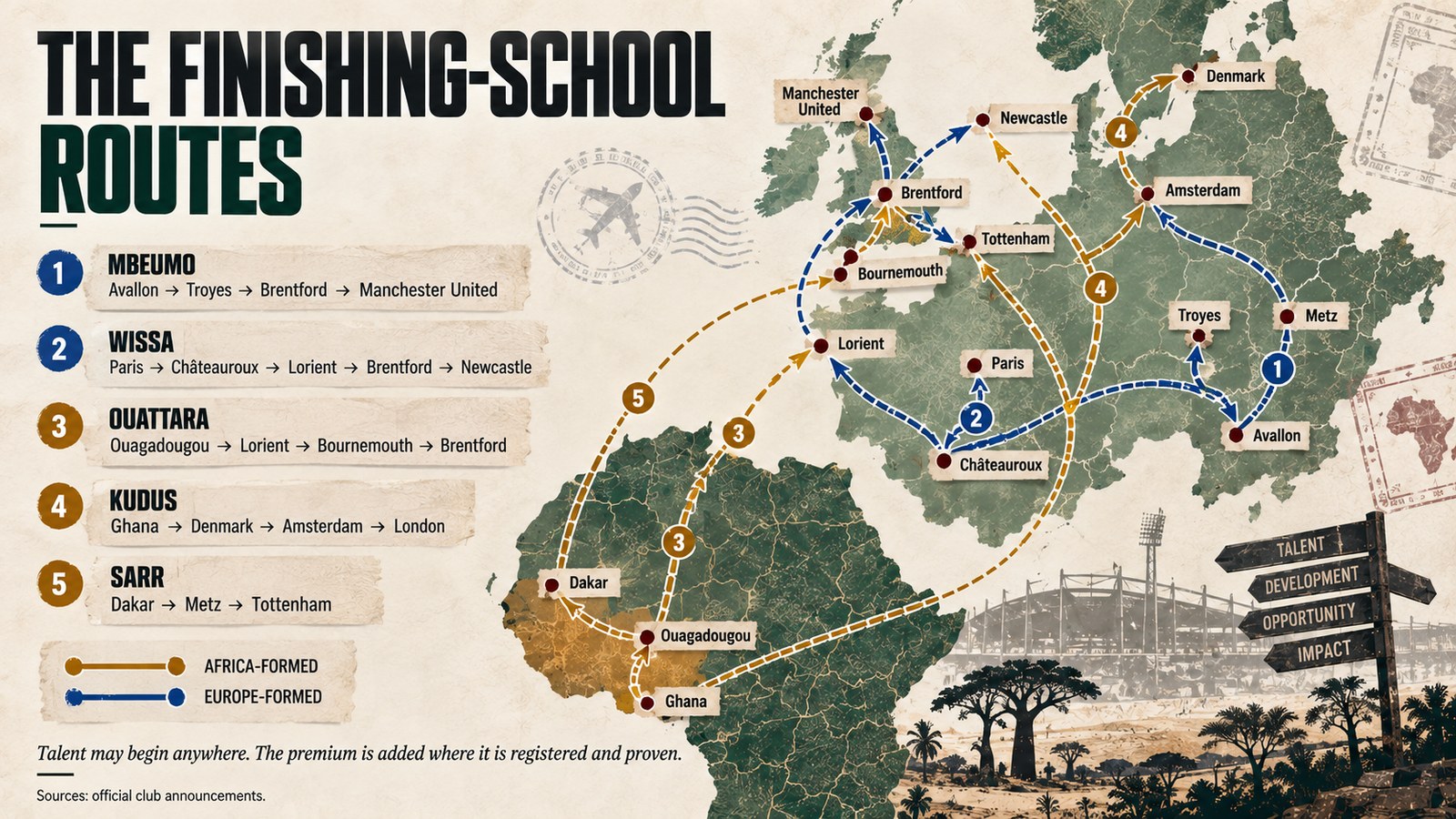
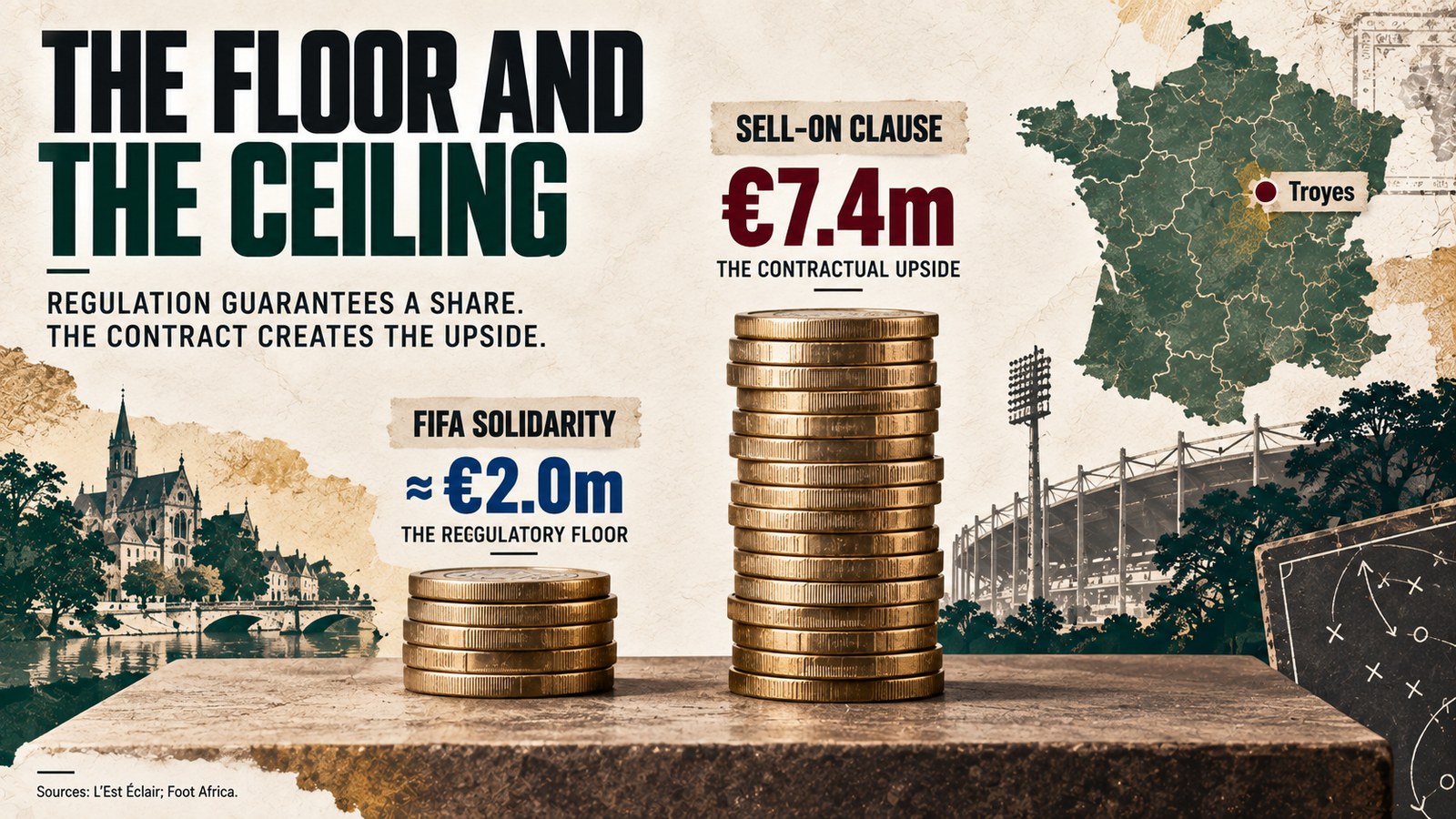
But look at the transfer that came before it. A year earlier, United had paid Brentford the same initial £65 million for another Cameroon international, Bryan Mbeumo. That windfall also landed in France: ESTAC Troyes stood to collect €7.4 million from a sell-on clause, plus about €2 million in training rewards. Mbeumo, though, was born in Avallon, in Burgundy, and came through the Troyes academy. Troyes did not intercept Cameroon’s reward. Troyes was the training club. That bean was grown in France.
Two Cameroon internationals, two identical fees, two different leaks: one through contract, the other through geography. Together they tell the real story of African players in the Premier League. It is less about extraction than about structure. A chain of regulatory, demographic and commercial filters decides where a player is formed and where he is proven, and therefore who gets paid when he is sold.
The puzzle in FIFA’s ledger
Until recently, “who got paid?” was unanswerable. Then, in November 2022, FIFA opened its Clearing House in Paris to calculate and distribute training rewards automatically. By July 2026, clubs had been allocated almost $1 billion, and more than $639 million had already been paid out.
FIFA’s World Cup review contained a striking figure. On average, 63 per cent of the training rewards generated by World Cup players went to clubs in the players’ own countries. Czechia kept 92.4 per cent, Argentina 89.8 and Germany 88.6. Senegal kept only 15.3 per cent, and Algeria 14.0.
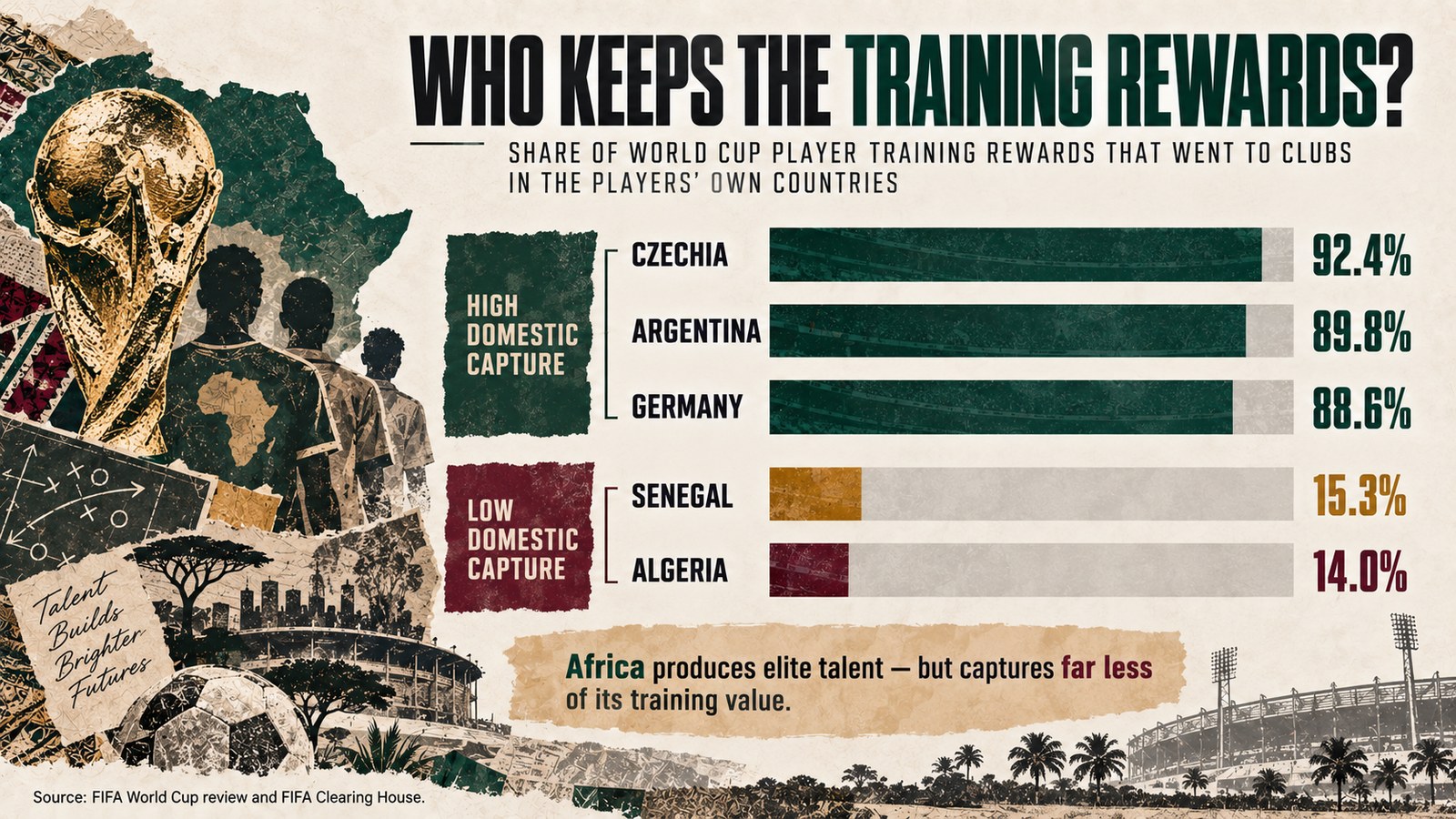
Senegal is no minor producer. It was the only African nation among the top ten generators of training rewards, and 17 of Côte d’Ivoire’s squad had generated them. By output, Africa’s football powers look like Croatia. By capture, they look like the United States.
The other side of the ledger completes the picture. England is among the biggest net payers of training rewards, while clubs in the Netherlands, France and Argentina are the biggest net recipients. England pays; France collects.
By output, Senegal looks like Croatia. By capture, it looks like the United States.
Two filters
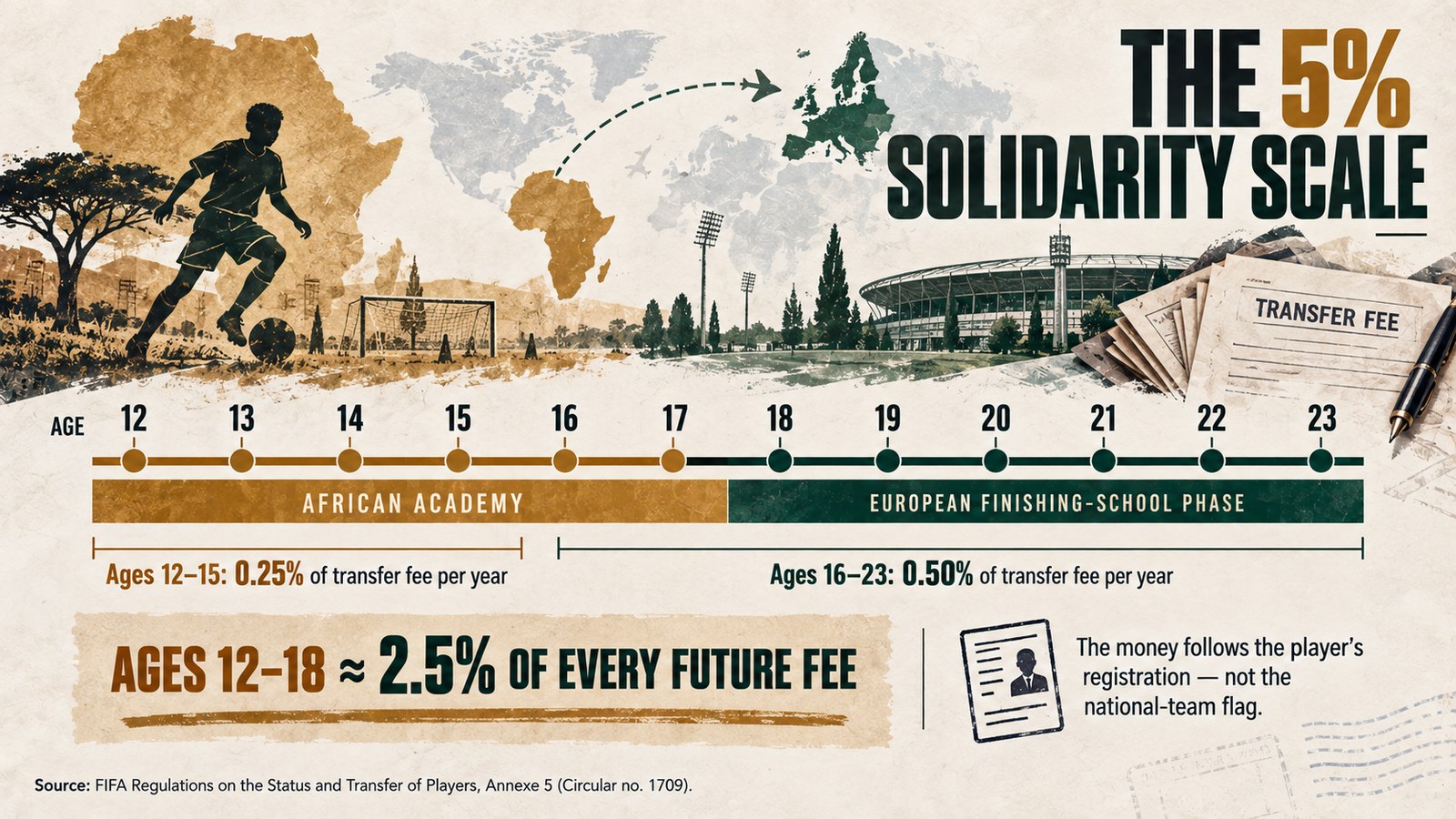
The first filter is demographic. A growing share of players who represent African nations were formed in Europe. Wissa is French-born and came up through Châteauroux’s youth system. Semenyo was born in London. At AFCON 2025, West Ham lost Aaron Wan-Bissaka to DR Congo, and he is a product of Crystal Palace’s academy. FIFA’s solidarity mechanism takes 5 per cent of each transfer fee and shares it among the clubs that registered the player between his 12th and 23rd birthdays. The money follows the registration, not the flag. Much of the value “leaking” from African football was never produced inside African registration systems at all.
The second filter is regulatory. Since Brexit, a player needs 15 points across six criteria to earn an FA work-permit endorsement. Those criteria are senior caps, domestic minutes, continental football and league quality, and a teenager in Dakar or Ouagadougou cannot meet them. English clubs admitted the cost: Premier League officials argued the system forced them to pay more for talent they could not reach early. A 2023 reform created a narrow side door, allowing up to four “Elite Significant Contribution” signings per club, but it is rationed.
The result is a well-worn itinerary. The African prospect goes first to a finishing school in France, Belgium, Denmark or the Netherlands, then on to England. Pape Matar Sarr joined Metz from Senegal’s Génération Foot in September 2020. Tottenham signed him eleven months later, at 18, and immediately loaned him back. Every stop adds another club that will share in future solidarity payments and negotiate sell-on clauses.
The Brentford arbitrage
A handful of mid-table clubs have realised that the most profitable place in this chain is the last stop before the elite.
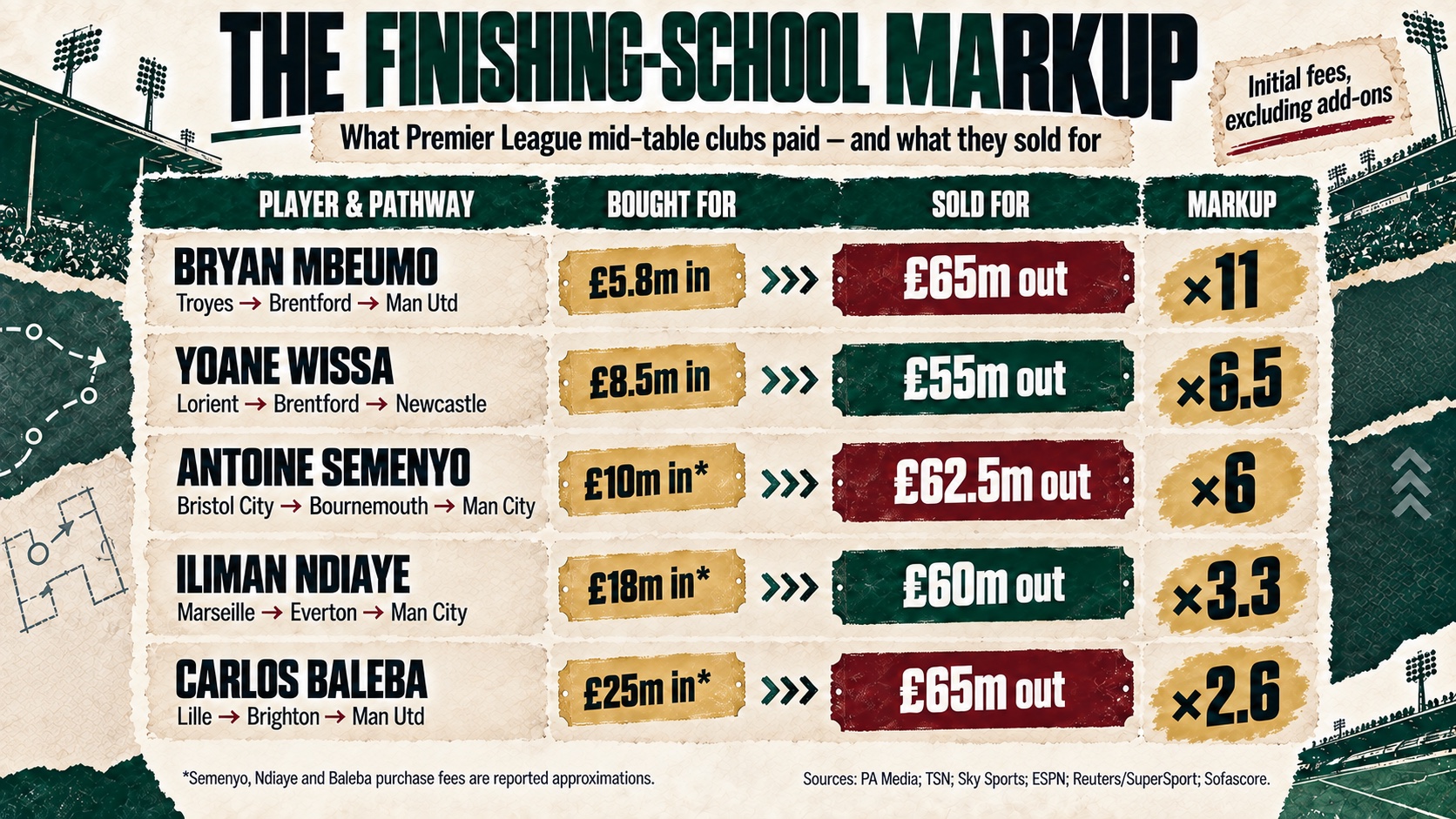
Brentford bought Mbeumo for £5.8 million and sold him for eleven times that. It signed Wissa from Lorient for £8.5 million and sold him to Newcastle for £55 million. Bournemouth paid Bristol City around £10 million for Semenyo in 2023, then sold him to Manchester City for an initial £62.5 million in January 2026, keeping a 10 per cent sell-on.
Why do the elite pay such premiums to domestic rivals? When Brentford paid a club record for Dango Ouattara from Bournemouth, head coach Keith Andrews explained it in one line: “We liked his Premier League experience, even at his young age.”
Call it the provenance premium. In wine, the grapes can come from anywhere, but the label sets the price. In today’s Premier League, talent can be formed anywhere, but the price is set by where a player last proved himself. The biggest markup on an African player’s value now happens between English clubs.
In wine, the label sets the price. In the Premier League, so does where a player last proved himself.
Where the five percent goes
A 2020 FIFA amendment turned that internal English market into an export channel. Since then, a transfer between two clubs in the same country triggers solidarity payments to any of the player’s training clubs registered in another country. When United bought Mbeumo, Troyes was paid on a deal struck in London. When Tottenham bought Kudus, money flowed back to Amsterdam, Denmark and Ghana.
Semenyo shows the opposite case. Every club that trained him was English, so his move from Bournemouth to City triggered no solidarity at all. Bristol City protected itself by contract: it is owed 20 per cent of any profit on his sale.
The lesson is blunt. Troyes’ solidarity entitlement was about €2 million, while its sell-on clause was worth €7.4 million. The regulation sets a floor, and the contract provides the upside.
The floor has improved. FIFA now identifies entitlements automatically through electronic player passports and pays clubs directly. But the passport only reflects what federations have recorded, and any entitlement below €100 is discarded. An academy that never properly registered a 13-year-old has no claim, however brilliant he becomes.
Three models that work
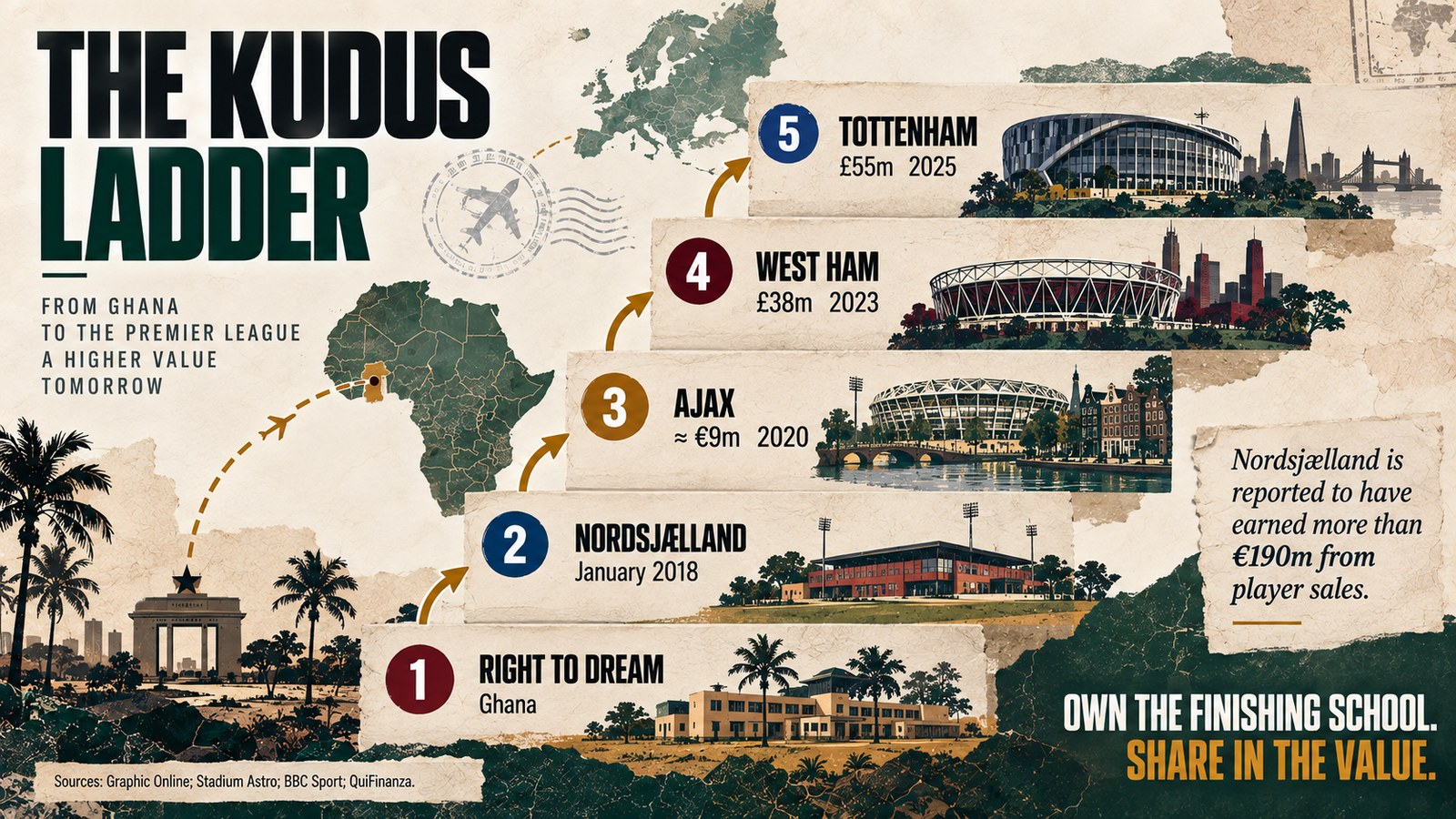
Integration. Right to Dream, founded in Ghana in the late 1990s by former Manchester United scout Tom Vernon, bought Denmark’s Nordsjælland in 2016. Kudus moved from the academy to the Danish club in January 2018. Ajax then paid roughly €9 million for him. West Ham paid £38 million and Tottenham £55 million. Because the academy owns the finishing school, the two share in the value rather than competing for it, and Nordsjælland is reported to have earned more than €190 million from player sales.
Partnership. Génération Foot’s exclusive pathway to Metz was extended for ten years in 2020, and in August 2026 three more players, including the Senegalese league’s top scorer, made the move.
Registration discipline. Ouattara came through the Majestic academy in Ouagadougou, moved to Lorient in 2020, and later went from Bournemouth to Brentford for a reported £42 million. If Majestic held his registration continuously from age 12 until he left, the 5 per cent scale would entitle it to roughly 2.5 per cent of that fee, or about £1 million from a transfer between two English clubs. Whether the club actually collects depends on the paperwork.
January’s hidden price
A winter AFCON removes a whole class of players mid-season, and absence creates value for those left behind. Ghana’s failure to qualify for AFCON 2025 left Semenyo and Kudus free. On 9 January 2026, with Omar Marmoush away with Egypt, City signed Semenyo. Bournemouth had already strengthened its hand: a release clause had kept him at the club for six months after summer interest, and the final fee beat every earlier offer. For agents, the AFCON calendar affects price, not just scheduling.
The Bottom Line
Mbeumo, Wissa, Semenyo, Kudus and Ouattara changed hands for about £280 million in a single year. Treating the gap between those fees and what reaches Africa as theft misreads the system. Much of that value was produced under European registrations, and it flows back to Europe as the rules intend. The share Africa could claim is lost mainly to three things: thin registration records, weak sell-on terms, and early exits to finishing schools that African academies neither own nor partner with. FIFA’s own data shows the size of the prize. Senegal generates training rewards like a European power but keeps barely 15 per cent of them. Closing that gap takes registration discipline, better contracts, and owning the finishing school. Those are the tools any serious football business already uses.
Sources & further reading
Public documents and reporting used to verify the article. Links open the original source.
- 01
FIFA Clearing House regulations
- 02
FIFA Training Rewards Calculator
- 03
Manchester United: Bryan Mbeumo
- 04
Tottenham Hotspur: Mohammed Kudus
- 05
The FA points-based registration system
Published by Football Business Africa · 20 September 2026.