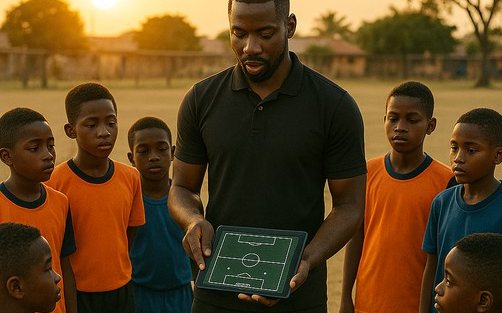
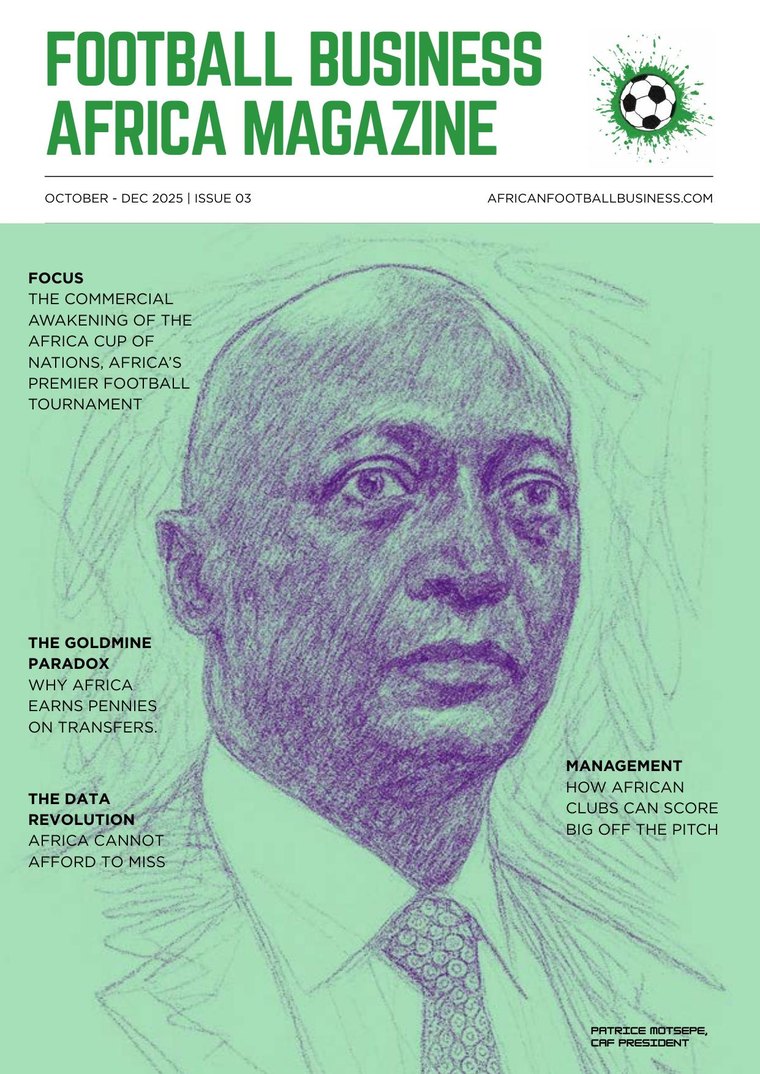
A Premier League star and an Ivy League scholar. Two divergent paths to excellence, both originating from the very same source. This dual success is the meticulously engineered output of Right to Dream (RTD), a revolutionary, Ghanaian-born talent ecosystem. Football Business Africa takes an in-depth look into a unique success story
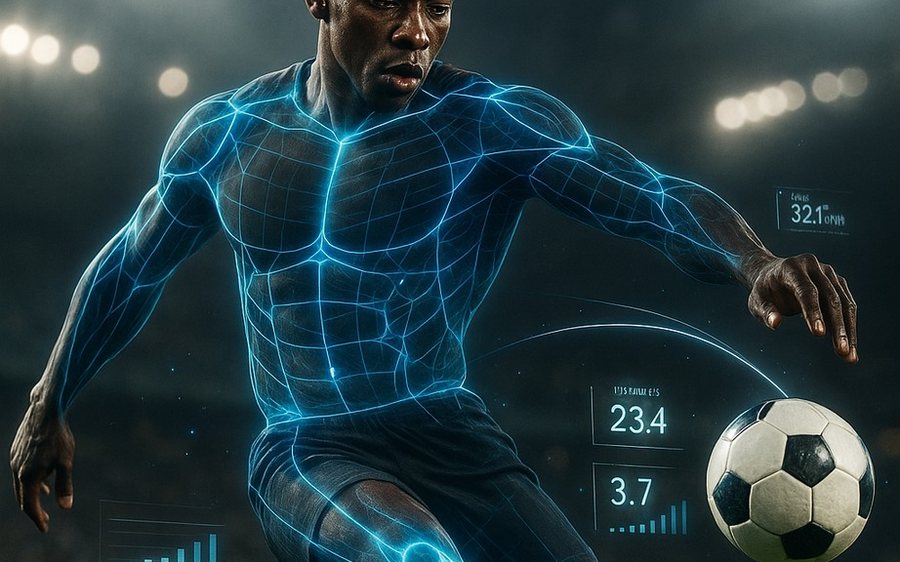
The scene is a familiar one, broadcast to hundreds of millions. A blur of motion, a thunderous strike, and the net ripples… Mohammed Kudus, West Ham United’s Ghanaian dynamo until his recent transfer to Tottenham Hotspur, wheels away in celebration, another product of Africa’s rich talent seam shining on the world’s biggest stage. His journey, from the dusty pitches of Ghana to the Premier League, is a story of immense talent realized.
Half a world away, another celebration is taking place, quieter but no less significant. Joy Okonye, a fellow graduate of the same academy system, steps onto the historic campus of Brown University, an Ivy League institution - an elite group of US universities reserved where some of the world’s brightest are educated - ready to pursue a degree and a Division I soccer career.
A Premier League star and an Ivy League scholar. Two divergent paths to excellence, both originating from the very same source. This dual success is no accident. It is the meticulously engineered output of Right to Dream (RTD), a revolutionary, Ghanaian-born talent ecosystem that is fundamentally rewriting the rules of football development.
What began in 1999 in the Accra home of a former Manchester United scout has morphed into a global, multi-club, multi-academy network spanning four countries. Part social enterprise, part savvy international business, and fueled by a landmark $120 million investment from the Mansour Group, RTD is mounting a powerful challenge to the extractive, high-attrition models of the past. It is proving, with every transfer fee and every scholarship earned, that investing in the whole person—the athlete, the student, and the leader—is not just good ethics, but brilliant business.
The Architect and His Doctrine
The story of Right to Dream begins with Tom Vernon. As Manchester United’s head scout in Africa, he witnessed firsthand a system he came to see as “fundamentally broken”. He saw the traditional European academy model as a brutal "pyramid," where a wide base of young hopefuls is progressively discarded, leaving a trail of broken dreams for the 99% who don’t make it.
Vernon envisioned a different model, not a pyramid, but a "pipe, where the bottom is the same width as the top". This philosophy became the bedrock of RTD. Instead of a high-stakes, cutthroat environment, Vernon built an institution on a long-term commitment to every child who entered.
From the thousands of children scouted annually across West Africa, only a handful are selected, but once they are in, they are guaranteed a five-year scholarship and a place in the system.
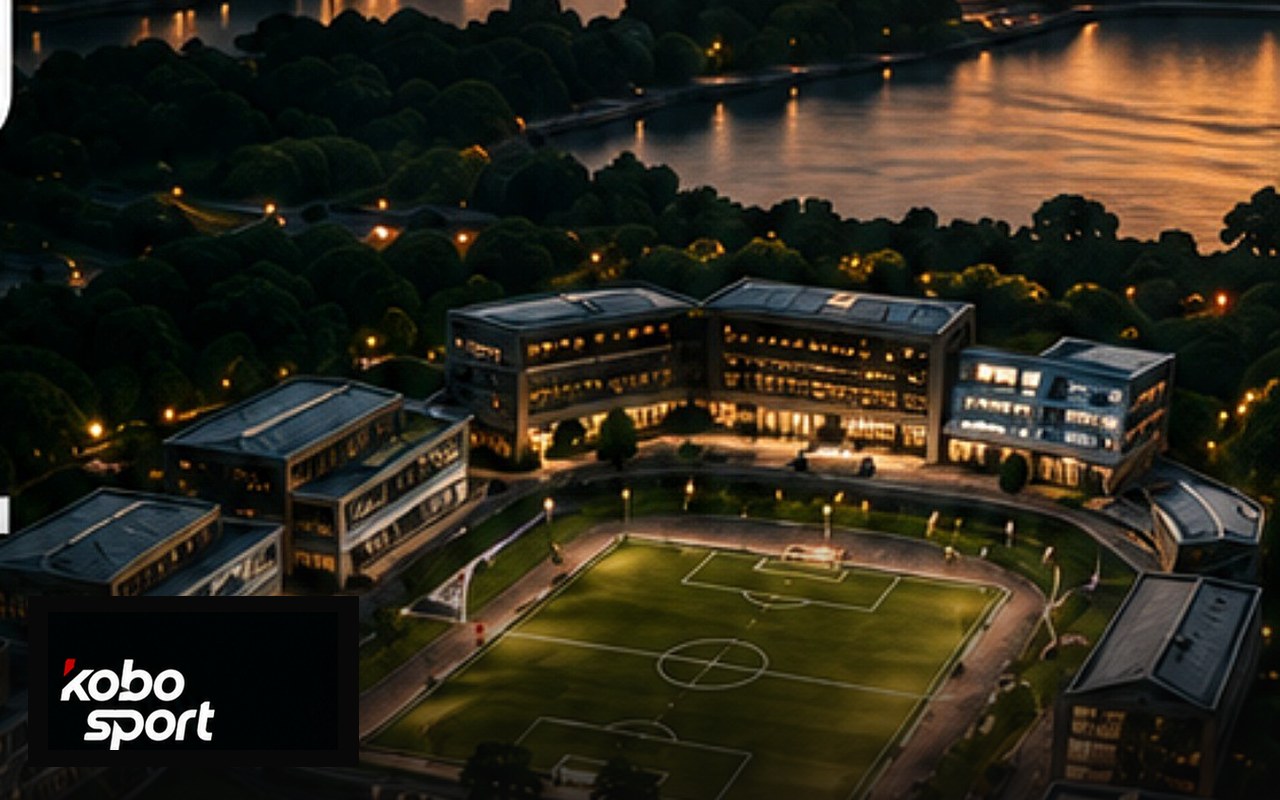
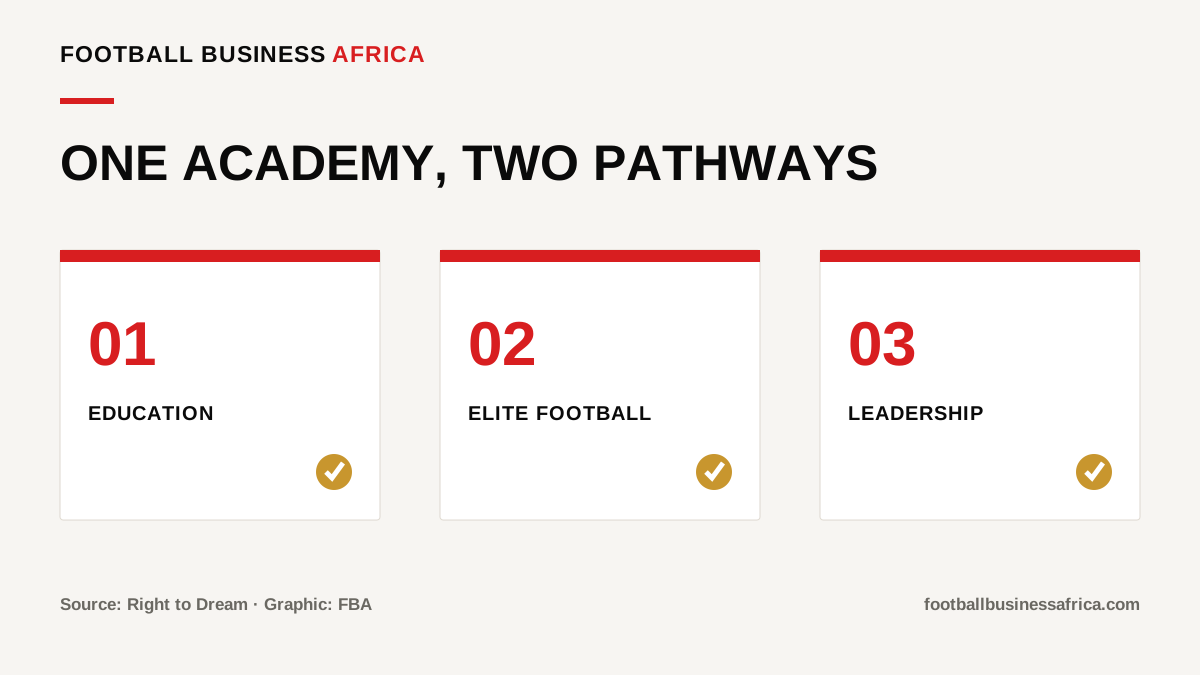
This commitment is built on three non-negotiable pillars: Football, Education, and Character. While the elite football training is undeniable—producing over 157 professional players and ranking among the world's top academies—it is the other two pillars that create RTD’s unique value proposition.
Every student is enrolled in a world-class academic program, with RTD’s school in Ghana an accredited Cambridge International Examination center. This creates a genuine, prestigious alternative pathway. For those who excel academically, RTD facilitates scholarships to top universities in the US and UK, a program that has generated an estimated $45 million in funding for its graduates.
The final pillar, character, is the glue that binds the model together. The curriculum is explicitly designed to cultivate leadership and a sense of social responsibility. "Don’t expect to reach your dreams if you don’t help other people reach theirs," reads a sign in the main academy building. This isn't just a platitude; every student is actively involved in a "give-back" project, instilling a sense of purpose that extends beyond personal gain.
Not a pyramid, but a pipe — where the bottom is the same width as the top.
The Business of the Dream: A Hybrid Global Enterprise
Vernon’s vision is supported by a uniquely sophisticated and adaptable business model. RTD operates as a hybrid entity: a registered charity in Ghana, a not-for-dividend business in Denmark and Egypt, and a 501(c)(3) non-profit in the United States. This flexible structure allows it to navigate different regulatory environments and maximize funding opportunities.
For years, the model was sustained primarily by player transfer revenue. The 2015 acquisition of Danish Superliga club FC Nordsjælland was a masterstroke. It gave RTD control over a crucial European pathway, allowing it to showcase its talent and, critically, capture the full economic value of its players. In the five years leading up to 2021, FCN generated over €65 million in transfer fees, largely from academy graduates.
The model’s potential attracted a game-changing partner. In 2021, the Mansour Group, an Egyptian multinational conglomerate, invested $120 million, assuming majority ownership through a new entity, ManSports.
Crucially, this was not framed as a simple CSR venture but as a strategic investment in a purpose-driven enterprise with the potential for significant social and financial returns.
Mohamed Mansour became Chairman, with Vernon remaining as CEO, ensuring continuity of vision.
This capital injection is fueling a new era of global expansion and commercial diversification. With the Mansour Group’s backing, RTD is actively working to reduce its reliance on the volatile transfer market and build more stable revenue streams through corporate sponsorships and brand partnerships.
Yet, the organization continues to demonstrate its commercial acumen in the transfer market. A landmark 2025 victory against FIFA at the Court of Arbitration for Sport (CAS) is a case in point. RTD successfully challenged FIFA's misallocation of solidarity payments from Ernest Nuamah’s €25 million transfer from FCN to Olympique Lyonnais, securing at least
€283,919 in development fees that had been incorrectly assigned.
The victory was more than financial; it exposed systemic flaws in FIFA’s record-keeping for African players and positioned RTD as a formidable advocate for development academies across the continent.
An Ecosystem of Opportunity: The Multi-Club Network
The Mansour investment has accelerated the build-out of RTD’s most powerful strategic asset: its vertically integrated multi-club ownership (MCO) network. Each club in the ecosystem serves a distinct purpose:
By proving that purpose and profit can coexist, Right to Dream is redefining what it means to win.
FC Nordsjælland (Denmark): Acquired in 2015, FCN is the European proving ground. It provides the ideal environment for top African graduates to adapt to the demands of European football. The club is famously committed to youth, consistently fielding the youngest team in Europe’s top-flight leagues.
FC Masar (Egypt): Following the Mansour investment, RTD acquired an Egyptian club in 2022, rebranding it as FC Masar. This, along with a new state-of-the-art academy in West Cairo, establishes a major hub for talent in the rich North African market.
San Diego FC (USA): The most ambitious project yet, this MLS expansion franchise, co-owned by Mohamed Mansour and the Sycuan Band of the Kumeyaay Nation, is set to begin play in 2025. It will feature the first fully-funded, tuition-free residential academy in MLS history, a direct challenge to the "pay-to-play" model dominant in American youth sports.
This network gives RTD unprecedented control over its players' careers, from a trial in a remote Ghanaian village to a professional debut in Europe or North America.
A New Benchmark for Africa
When benchmarked against its peers, RTD’s model stands apart. While Senegal’s Génération Foot has been incredibly successful in producing talent like Sadio Mané, its exclusive partnership with French club FC Metz creates a dependency. RTD’s ownership model provides far greater autonomy and philosophical alignment.
Other academies across the continent operate primarily as a private, tuition-based institution. In contrast, RTD’s all-scholarship model, where 70% of students come from families earning less than $2 a day, allows it to access a vastly wider talent pool.
Even when compared to European giants, the distinction is clear.
The academies of Ajax and FC Barcelona are legendary production lines, but they are designed with a singular purpose: to produce players for their specific first-team systems and playing styles. RTD is fundamentally pathway-agnostic. Its ultimate commitment is to find the best outcome for each individual, whether that’s at one of its own clubs, another professional team, or a world-class university.
As it expands into new markets, including a stated ambition to enter the UK, Right to Dream faces the challenge of scaling its unique, hands-on culture. But its impact is already undeniable. It has created a blueprint for a more sustainable, ethical, and holistic approach to talent development. By proving that purpose and profit can coexist, Right to Dream is not just building a global football business; it is redefining what it means to win.
Sources & further reading
Public documents and reporting used to verify the article. Links open the original source.
- 01
Right to Dream: organisation and leadership
- 02
Tottenham Hotspur: Mohammed Kudus signing
- 03
Sky Sports: Kudus and Right to Dream
- 04
FC Nordsjælland academy
Originally published in Football Business Africa, Issue 03 · Oct–Dec 2025.