The numbers tell a remarkable story. Over 500 African players currently light up Europe's top eleven leagues, generating billions in transfer fees and salaries. Yet back home, most African clubs and academies still rely on gut instinct, traditional scouting, and outdated training methods while their European counterparts use cutting-edge data analytics to gain every possible advantage.
This data gap isn't just about staying modern
—it's about survival in an increasingly competitive global football ecosystem.
"When you don't have a scientific opinion, it becomes very subjective," Kingsley Pungong, CEO of Rainbow Sports Global told Quartz in 2022. Mr. Pungong’s company launched the African Football Data Center that year. "And when it's subjective, it becomes a subject to varied interpretations. That's why our football is mainly not appreciated because everybody has a subjective opinion."
Pungong's words highlight a critical problem: African football talent is consistently undervalued because the continent lacks the data infrastructure to prove its worth scientifically. "If you wanna say this guy is good enough for Bayern Munich, you just don't say it as being a subjective opinion, you say it based on a scientific assertion," the Cameroonian entrepreneur added.
The Global Data Revolution Leaves Africa Behind
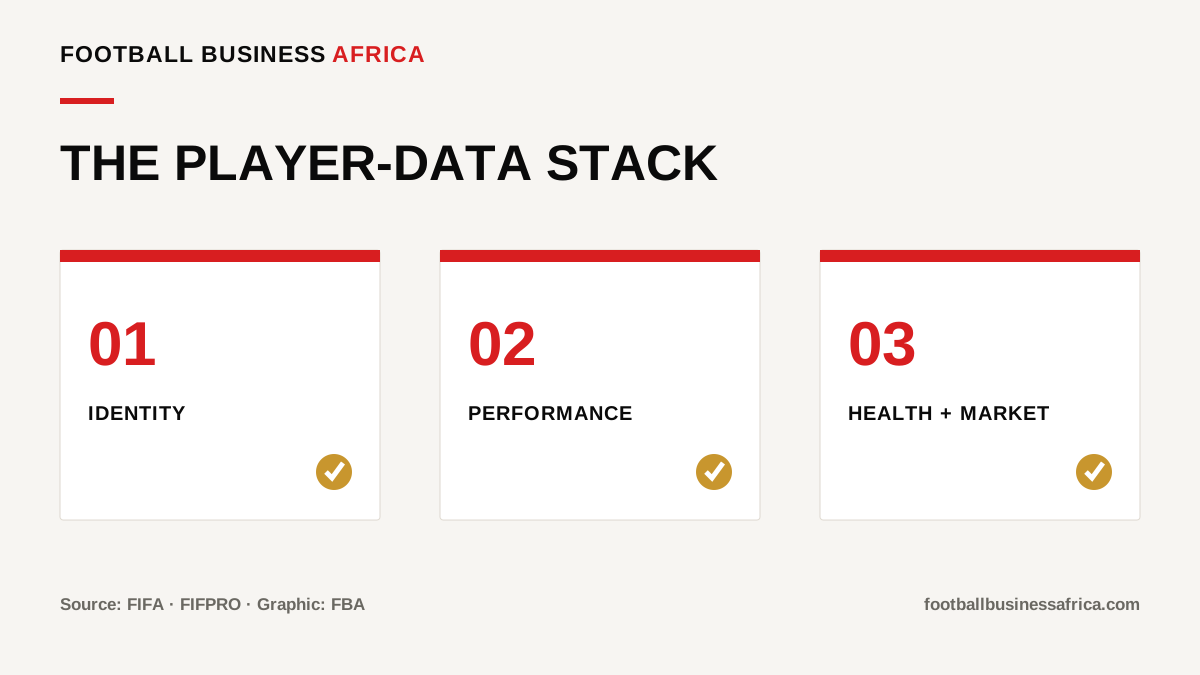
Leading clubs increasingly combine performance, medical and recruitment data, while many African clubs still struggle to maintain consistent identity and match records. The competitive gap is therefore not only analytical; it begins with basic data infrastructure.
Recent surveys show that 76-79% of top-tier European clubs and national teams use live data to adjust training at both squad and individual levels, compared to only 54% in third-tier clubs—a gap that becomes a chasm when compared to most African clubs.
This isn't just about having fancy technology. Modern football has evolved into a science where Expected Goals (xG) models predict a striker's true quality, GPS tracking prevents injuries before they happen, and tactical algorithms expose weaknesses invisible to the human eye. European clubs now employ teams of data scientists alongside traditional scouts, creating hybrid scouting networks that identify talent with unprecedented accuracy.
Consider this: Barcelona's La Masia academy graduates are reported to now complete 15% more successful dribbles thanks to biomechanical analysis, while over 87% of Premier League academies use AI-powered performance tracking.
Meanwhile, African academies with tremendous raw talent—like Nigeria's Pepsi Football Academy (which produced John Mikel Obi) and Senegal's Generation Foot Academy (home to Sadio Mané)—could multiply their success rates with similar technology.
The Hidden Cost of the Data Gap
The consequences of this data deficit ripple through African football in ways both obvious and subtle:
Talent Hemorrhage: European scouts equipped with sophisticated analytics can identify promising African players earlier and cheaper than local clubs can develop them. The continent has become a major talent exporter without capturing proportional economic value from this migration.
When you don’t have a scientific opinion, it becomes subjective — and our football goes unappreciated.
Tactical Stagnation: Without data insights into pressing triggers, passing networks, or defensive positioning, African teams struggle to implement the complex tactical systems now standard in world football.
Injury Epidemic: Lack of workload monitoring means African players suffer preventable injuries that GPS tracking and heart rate analysis could predict and prevent.
Investment Flight: International sponsors and broadcasters increasingly demand detailed analytics to justify investments. African leagues without data struggle to attract these crucial revenue streams.
Youth Development Waste: Breaking The Lines reports that scouting software could revolutionize talent identification across Africa, yet most academies still rely on traditional methods that miss countless gems in remote areas.
Success Stories Show the Way Forward
Progressive African organizations are already proving data's transformative power: Rainbow Sports Group's African Football Data Center says it has begun collecting comprehensive data on player valuations, sponsorship deals, and performance metrics across the continent. Their approach aims to replace subjective opinions with hard facts.
Technology Integration: South African football legend Jomo Sono has introduced the PlayerMaker system—boot-mounted devices that track passes, ball touches, and movement patterns—providing coaches with precise data to refine training and improve performance.
Academic Excellence: Ghana's West African Football Academy (WAFA) combines football development with formal education while embracing modern training methods. Their systematic approach has produced numerous professional players and demonstrates how African academies can modernize without losing their identity.
Continental Connectivity: A platform like Afriskaut says it provide extensive databases of match footage and player statistics, enabling clubs worldwide to scout African talent more effectively than ever before.
Economic Opportunity in the Digital Age The stakes extend far beyond football success. Africa's sports economy is projected for massive growth, driven by a young population and emerging global athletes. Countries like Rwanda have shown how strategic sports investment—including partnerships with Bayern Munich and Arsenal—can boost tourism and economic development.
Data analytics represents a unique opportunity for African football to leapfrog traditional development models. Just as mobile banking allowed Africa to skip conventional banking infrastructure, smart data adoption could help African clubs compete with European giants without matching their budgets.
Data doesn’t replace passion, skill or cultural identity. It amplifies them.
Consider the multiplier effect: Better data leads to improved player development, which increases transfer values, which generates more revenue, which funds better infrastructure and technology. This virtuous cycle could transform African football from a talent exporter into a football powerhouse that retains its best players while competing globally.
The data revolution has begun. African football's future depends on joining it—today.. The question is whether African clubs, academies, and federations will seize this opportunity or let it pass by..
The Competitive Clock is Ticking
European clubs aren't standing still. They're investing heavily in artificial intelligence, machine learning, and predictive analytics that will only widen the gap with traditional approaches. Surveys indicate that while elite football increasingly adopts data-informed approaches, the variability between organizations remains significant—creating a closing window of opportunity for African football to catch up.
The choice is stark: embrace the data revolution now, or watch African football become increasingly marginalized as the global game evolves without it.
Success stories like Liverpool's Sadio Mané (discovered at Generation Foot Academy in Senegal) and Arsenal's Mohamed Elneny (developed through traditional scouting) prove African talent can compete at the highest level. Imagine how many more world-class players could emerge if African academies had the same analytical tools as their European counterparts.
The data revolution isn't coming to African football—it's already here. The question is whether African clubs, academies, and federations will seize this opportunity or let it pass by.
CAF and national federations must prioritize data infrastructure investments. Government sports ministries should include analytics training in coaching education programs. Private investors should recognize data adoption as a catalyst for returns on football investments.
Most importantly, African football stakeholders must abandon the false choice between tradition and technology. Data analytics doesn't replace passion, skill, or cultural identity—it amplifies them. The most successful African football future will combine the continent's incredible raw talent with the scientific precision that defines modern football.
As Kingsley Pungong powerfully argues, the time for subjective opinions has passed. African football's global respect and economic potential depend on scientific assertions backed by hard data. The data revolution has begun. African football's future depends on joining it—today.
Sources & further reading
Public documents and reporting used to verify the article. Links open the original source.
- 01
FIFA professional football report
- 02
FIFPRO Player IQ
- 03
FIFPRO: player data rights
- 04
FIFA Global Transfer Reports
Originally published in Football Business Africa, Issue 03 · Oct–Dec 2025.