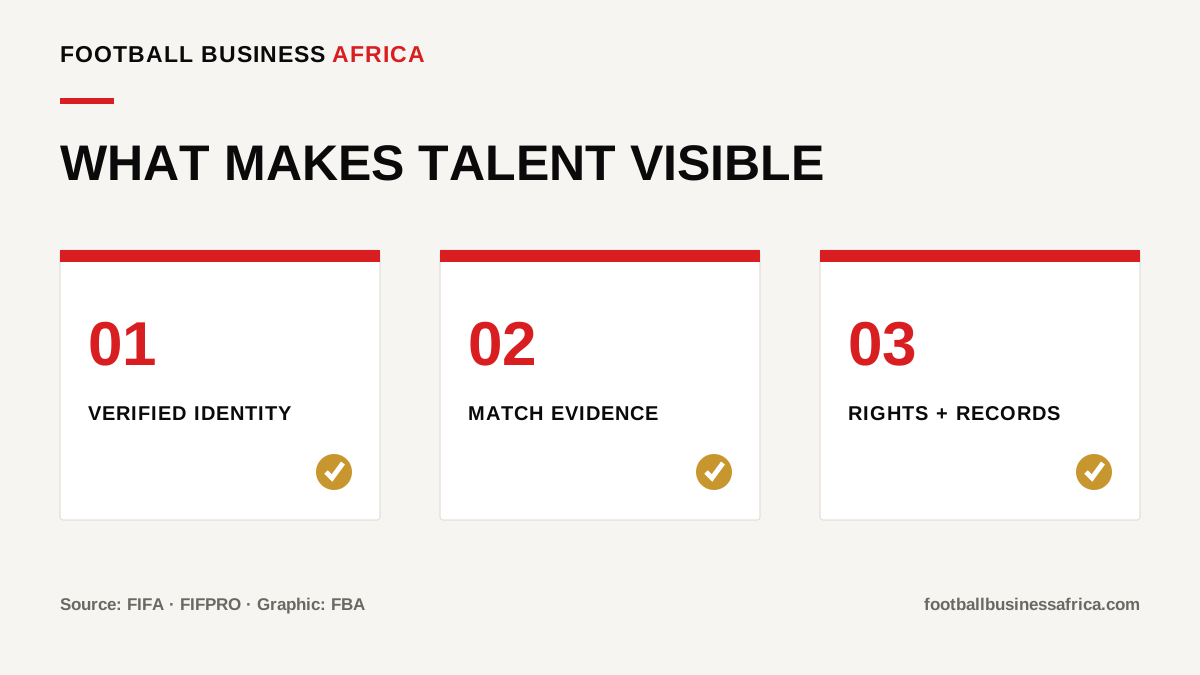

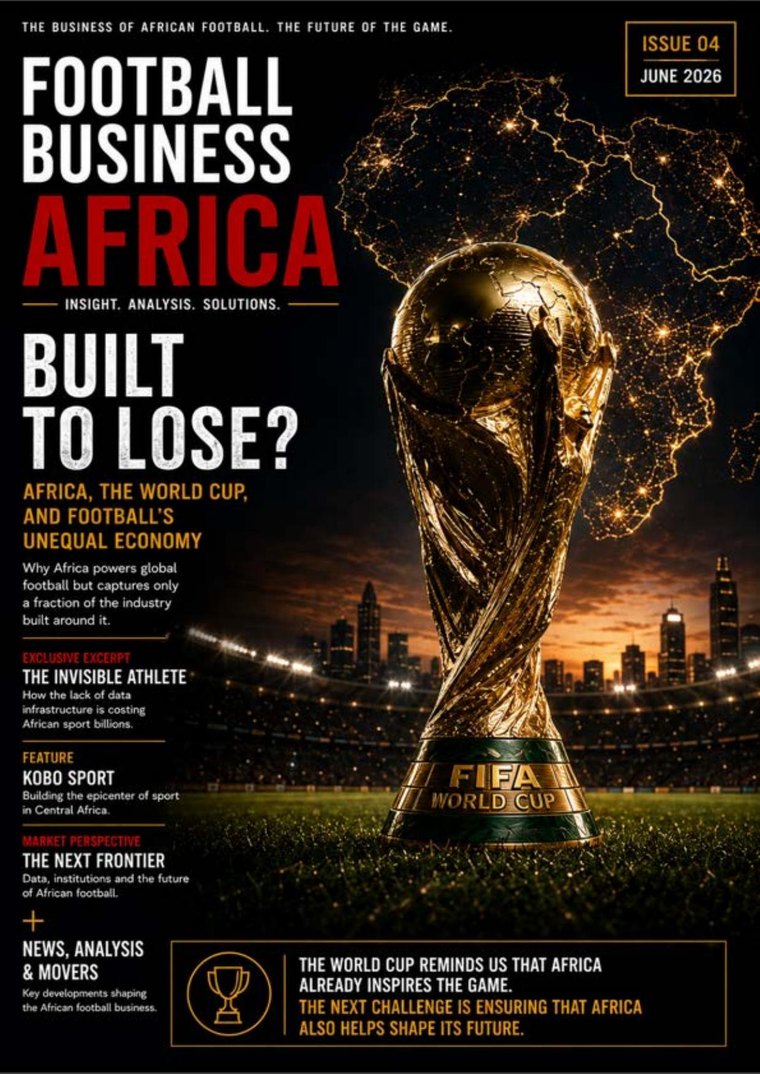
Africa fuels the global sports economy, yet the continent’s sports sector remains stuck in the informal shadows. Why do millions of dollars in FIFA solidarity payments go uncollected every year? Why are African academies unable to capture the value of the stars they produce? The answer is not a lack of talent. It is a lack of data. The Invisible Athlete argues that the “unbankability” of African sport is a self-inflicted wound caused by the lack of verifiable records. Without a digital history, an athlete is a risk. With a digital history, they are an asset.
The valuation gap: why African giants remain financial dwarfs
Sport in Africa is often discussed in terms of passion, potential and raw talent. These descriptors, while true, obscure the fundamental economic reality: as a sector, African sport is punching significantly below its weight. Clubs like Mamelodi Sundowns in South Africa and Al Ahly in Egypt represent the gold standard of African football management. They dominate their domestic leagues, compete perennially for continental honours, and command the loyalty of millions. Yet through the lens of the global sports economy, these giants are financial dwarfs, valued in the range of €30 million to €40 million — rounding errors beside mid-tier clubs in the English Championship or Ligue 1.
Why does this disparity exist? It is not a lack of fans. Al Ahly boasts a fanbase estimated at over 50 million people, arguably larger than many European heavyweights. It is not a lack of on-field success. The disparity is structural, and it is rooted in data. Modern sports valuation is driven by the ability to monetise an audience, not just sell tickets. Real Madrid generated over €1 billion in 2023/24 not primarily by selling tickets, but by selling verified access to a global audience: they can tell a sponsor exactly who their fans are, where they live, what they buy and how they engage.
In contrast, the African club’s fan is largely anonymous. Al Ahly may have 50 million supporters, but if they are watching on communal televisions, buying counterfeit jerseys and engaging in unmeasured conversations, they remain economically invisible to the global sponsor. A sponsor cannot buy what it cannot measure.
A club’s value today is no longer what it wins on the pitch, but what it can prove about its audience.
The solidarity hemorrhage: the cost of silence
While the valuation gap is a missed opportunity, the loss of FIFA solidarity payments represents an active financial hemorrhage. This is not money we could make; this is money we are making, but failing to collect. Under the Regulations on the Status and Transfer of Players, 5% of any international transfer fee must be deducted and distributed to the clubs that trained the player between the ages of 12 and 23.
In a data-mature environment, this is a button-click — the English FA’s database can instantly generate a verified history for any player. In the African context, this simple requirement becomes an insurmountable wall. Because the player was never registered in a central digital database at age 12, there is no digital footprint to print. The academy might have paper records or the testimonies of coaches, but FIFA does not process paperwork based on memory. Without the digital record, the claim is rejected, and the academy that built the foundation receives nothing.
For an academy operating on less than €20,000 a year, €250,000 is not just revenue — it is a generational endowment, the difference between survival and expansion, between a dirt pitch and a turf field. Yet year after year, African academies leave this money on the table.
Data as a strategic asset
This failure does more than deplete bank accounts; it cripples the competitive integrity of African football. A European club’s scouting department uses data analytics to identify a 16-year-old in Lagos or Accra, analysing passing accuracy, sprint speed, decision-making under pressure and injury risk. An African club, lacking the same infrastructure, is often blind to the true market value of its own asset, negotiating on reputation or need rather than verified metrics. This information asymmetry ensures the seller always loses. Data is not just for selling players; it is for winning matches — optimising training loads, reducing injuries and exploiting tactical weaknesses.
Building the digital sovereignty of sport
The solution is not more passion or more talent-identification camps. It is infrastructure — a continental commitment to a digital nervous system for sport. Relying on European databases to solve African problems is a colonial mindset in the digital age; it means building a house on rented land. Africa must build its own unified system: every player identified with a single mandatory digital ID from the age of 10; every movement recorded, with every transfer, loan and contract logged in real time; every performance measured through standardised metrics that follow the player; and every right protected, with a system that automatically triggers eligibility for solidarity payments.
This infrastructure is the bedrock of economic independence. It transforms the narrative from begging for money to commanding investment. When an African club can walk into a boardroom in London or Dubai and say, “we have 5 million verified fans, 500 players in our system, and 100 data points per player,” the conversation changes. They are no longer seeking charity; they are offering a partnership. It is time for Africa to stop being the supplier of invisible athletes and become the owner of visible, valuable and irreplaceable assets.
Sources & further reading
Public documents and reporting used to verify the article. Links open the original source.
- 01
FIFA Clearing House regulations
- 02
FIFA Training Rewards Calculator
- 03
FIFPRO Player IQ
- 04
FIFPRO: player data rights
Originally published in Football Business Africa, Issue 04 · June 2026.