

The future of African football may not be decided on the pitch. It may be decided in databases. For decades, the continent has approached football primarily as a sporting activity. The rest of the world increasingly treats it as an information business.
Modern clubs do not simply recruit players. They collect data. They map audiences. They document performance. They monetise digital communities. They transform information into financial value. Africa still excels at producing footballers. But it often struggles to document them.
As The Invisible Athlete argues, this gap carries a significant economic cost. Millions of euros in potential training compensation can become difficult to recover when player histories are incomplete. Clubs with enormous fan bases remain commercially undervalued because those audiences are only partially measured. Investors hesitate because informal systems generate uncertain returns.
The irony is that Africa may already possess one of football’s greatest comparative advantages: a young population and an extraordinary reservoir of talent. What is missing is infrastructure — not only stadiums, but administrative infrastructure, digital infrastructure and institutional infrastructure.
The countries likely to dominate African football may not simply be those that produce the best players. They may be those that build the best systems around them.
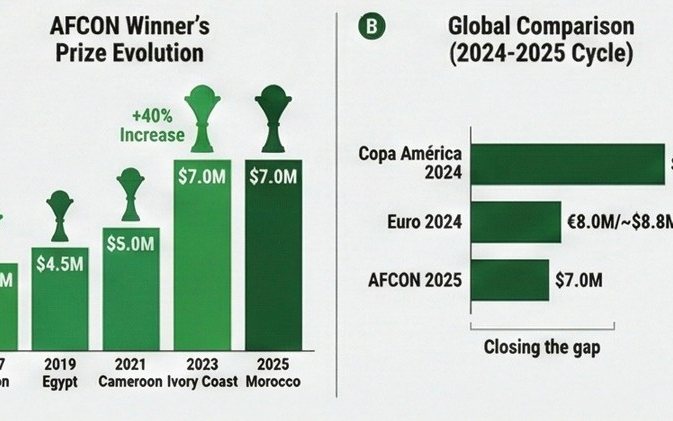
Morocco’s long-term investments ahead of the 2030 FIFA World Cup illustrate how football can become part of a broader economic and infrastructure strategy. Airports, transport, stadiums and tourism are increasingly planned together rather than separately. The lesson extends beyond one country. African football does not need to imitate Europe. But it does need to become more visible.
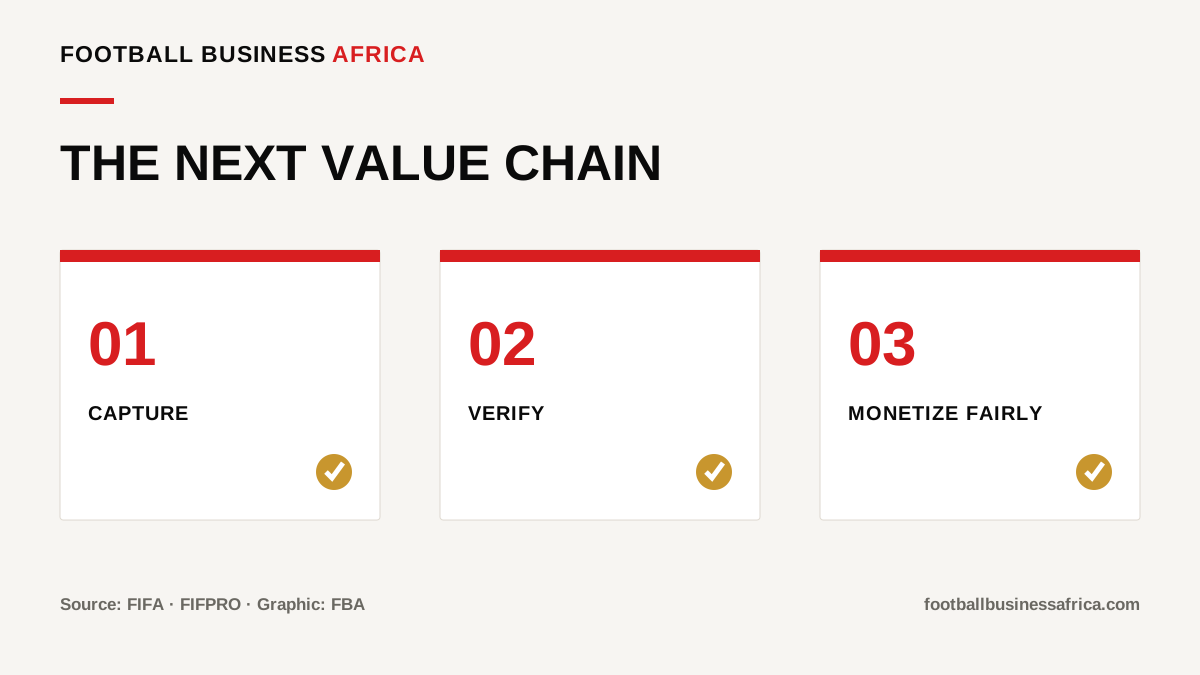
A player with a verified history is easier to protect. A club with measurable supporters is easier to sponsor. A league with reliable data is easier to broadcast. A sports sector with documented assets is easier to finance. The next frontier is not discovering more talent — the world already knows Africa can do that. The next frontier is building institutions capable of transforming talent into long-term economic value. Because in modern football, data is no longer a luxury. It is infrastructure.
Sources & further reading
Public documents and reporting used to verify the article. Links open the original source.
- 01
FIFA Global Transfer Reports
- 02
FIFA Clearing House regulations
- 03
FIFPRO Player IQ
- 04
FIFPRO: player data rights
Originally published in Football Business Africa, Issue 04 · June 2026.