On a Saturday night in almost any bar in Nairobi, Lagos or Abidjan, the television on the wall tells two stories at once. The first is the match. The second, which nobody watches, sits in the corner of the screen: the logo of the company that paid for the right to show it.
For years that logo told you which part of Africa you were in. In the French-speaking west and centre, it was Canal+. In the English- and Portuguese-speaking south and east, it was SuperSport, the sports arm of South Africa's MultiChoice. Two empires, divided by language, like the colonial maps they quietly echoed.
That map no longer exists. When FBA mapped the battle of the broadcasters in January 2025, the fight was crowded. Twenty-one months later, one merger, one price shock and a new breed of digital challengers have redrawn it. Ahead of AFCON 2027, here is who controls what Africa watches, who pays, and who earns.
The Auction
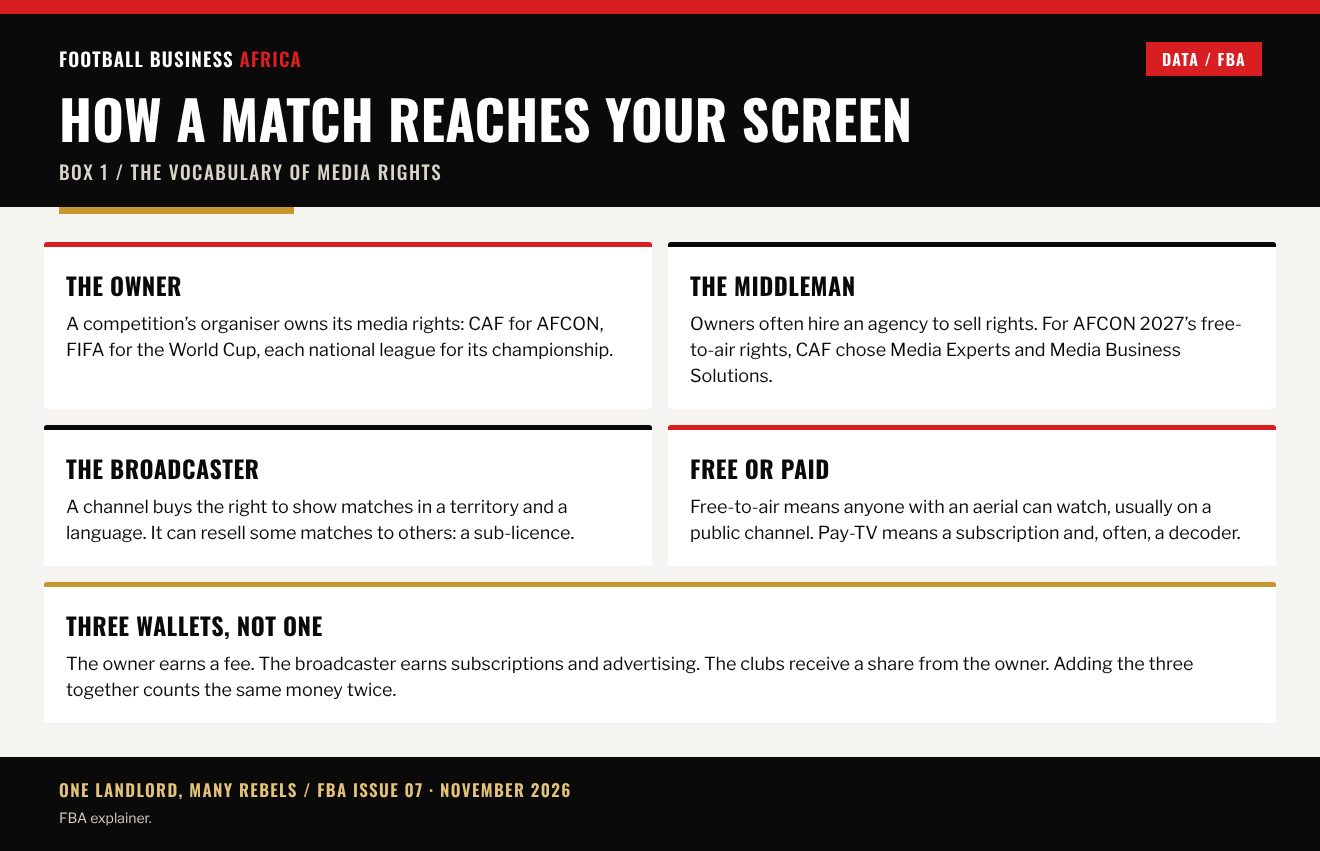
Start with the biggest prize. Every major tournament is sold before a ball is kicked: the organiser auctions the right to show it, territory by territory, language by language. In late August 2026, the Confederation of African Football (CAF) put up for sale the rights to show next year's Africa Cup of Nations across sub-Saharan Africa. The tournament, AFCON 2027, will be played in Kenya, Tanzania and Uganda from 19 June to 17 July.
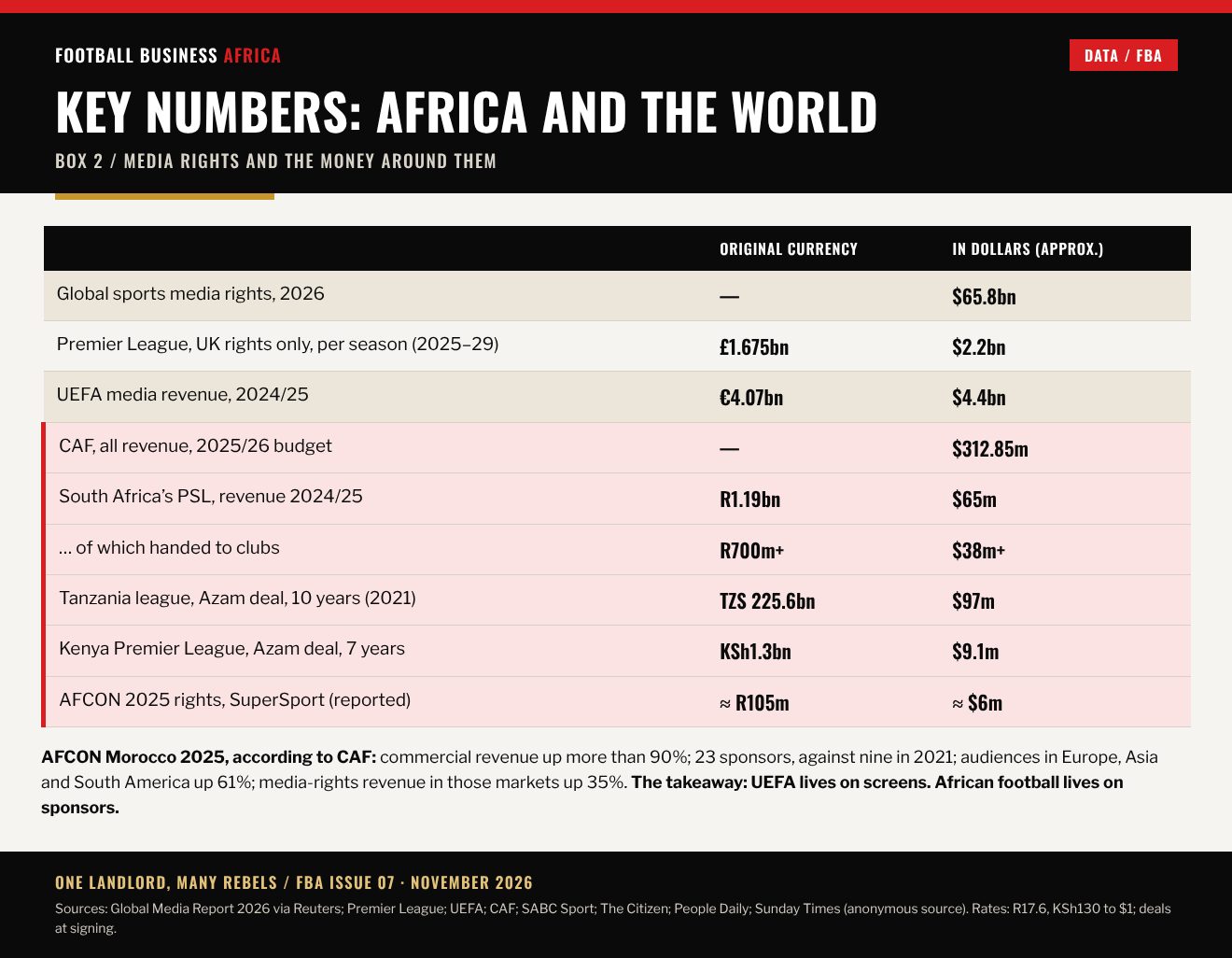
At least fifteen companies showed interest, according to South Africa's Sunday Times. An unnamed insider told the paper that the value of the rights had risen by more than 150%. SuperSport, the source said, had paid around R105 million (about $6 million) for the previous edition, in Morocco, and had been told CAF would not renew "at the previous rate".
Those figures come from a single anonymous source and should be read as such. But the direction of travel was clear. Then came the twist. On 29 September, the winner was announced: Canal+, the French group, would show the tournament and its qualifiers in French on its own channels, and in English and Portuguese on SuperSport. No price was given.
SuperSport had not lost after all. It had simply stopped bidding for itself.
Five weeks later, on 3 November, CAF named the free-to-air side of the deal: two agencies, Media Experts Limited and Media Business Solutions, will resell the tournament to national broadcasters across the region. The local channels themselves are still to be announced.
One Landlord
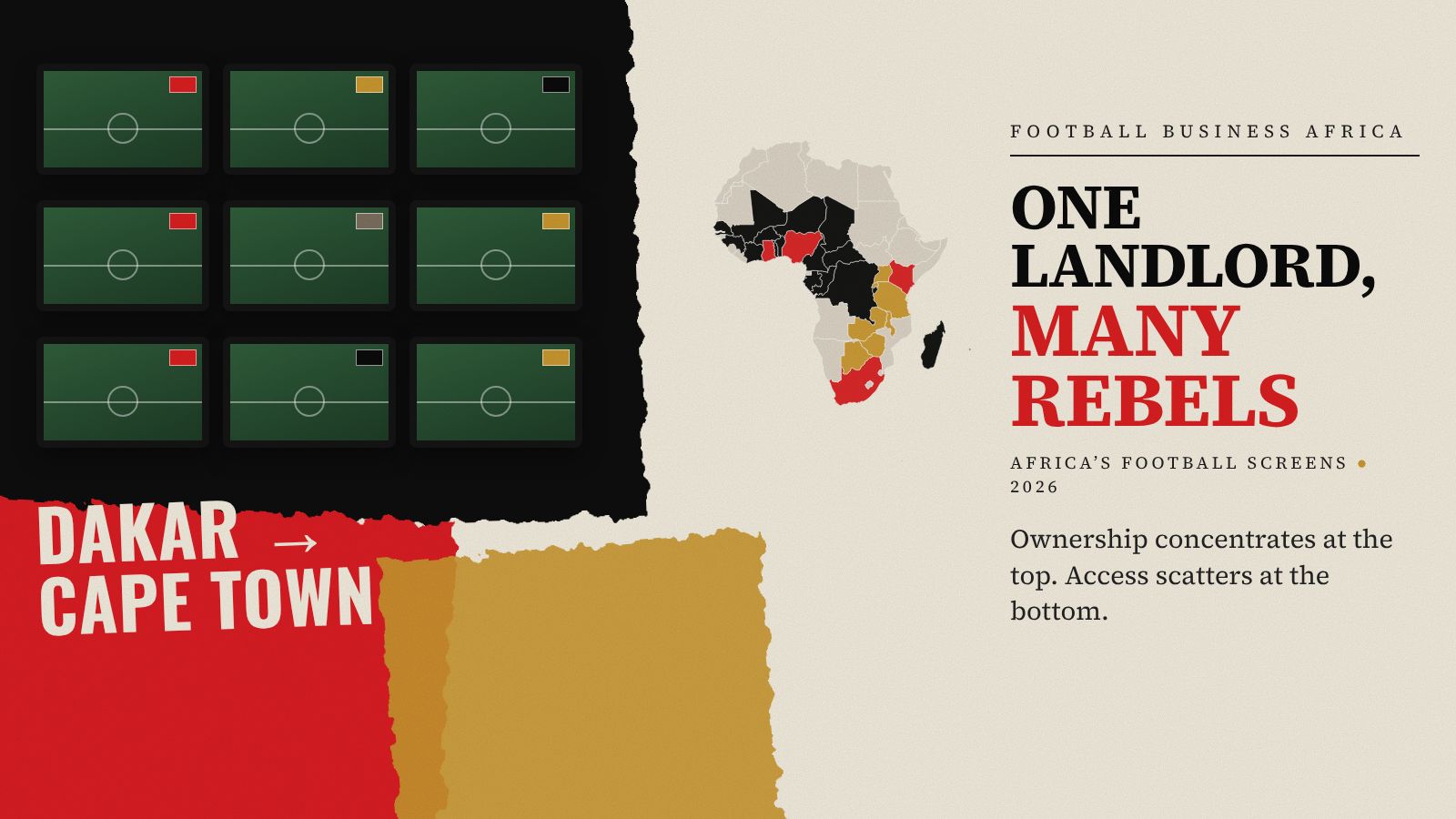
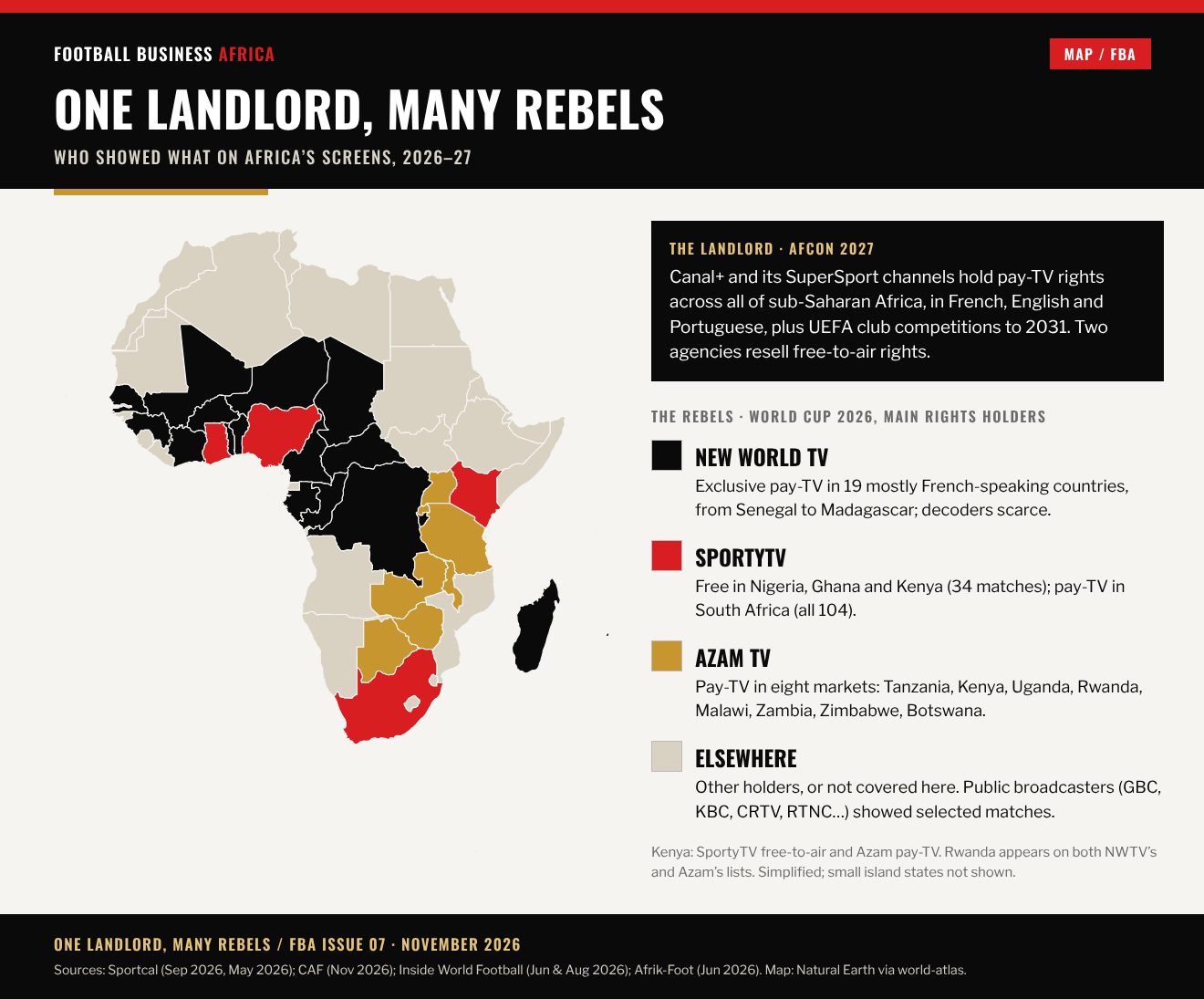
In September 2025, after a siege of nearly two years, Canal+ took control of MultiChoice in a deal that valued the South African group at about R55 billion (roughly $3 billion). With it came DStv, GOtv and SuperSport. The two empires became one. From Dakar to Cape Town, a single company now owns the main pay-TV gateway to African football.
The new owner moved like a coach inheriting a losing dressing room. Decisions on SuperSport's rights purchases, once taken in Johannesburg, have been pulled to Paris, according to several reports in February 2026. Showmax, MultiChoice's streaming service, was shut on 30 April 2026; it had lost R4.9 billion (about $280 million) in 2025 alone. Then came the signings: Europe's Champions League, Europa League and Conference League, secured for sub-Saharan Africa from 2027 to 2031; and AFCON.
A league that once played Canal+ against SuperSport now negotiates with one door.
Why does this matter to a fan? Because prices for rights, like prices for anything, depend on competition. When the two largest bidders in a market share an owner, the auction loses its tension.
Scale has not made the business easy. In its last full year as a listed company, to March 2025, MultiChoice lost 1.2 million TV subscribers, falling to 14.5 million, and saw billions of rand of revenue wiped out by weak African currencies.
There is also a question that goes beyond money. Canal+ is controlled by the Bolloré family, whose French media holdings critics, including Reporters Without Borders, accuse of a hard-right editorial turn. In December 2023, Canal+ complied with orders from Guinea's media regulator to suspend channels critical of the military government; StarTimes removed the same channels days later. In South Africa, the Competition Commission said in March 2026 that it had "prioritised" monitoring whether the new owner is keeping the promises it made to win approval, from a moratorium on job cuts to its treatment of suppliers.
The Gambler and the Rebels
Every good story needs an outsider. Africa's was New World TV (NWTV), a pay-TV operator from Lomé, Togo, that won the 2022 World Cup for French-speaking Africa and then, in December 2023, CAF's rights across sub-Saharan Africa for 2023 to 2025. CAF's president, Patrice Motsepe, called it "the biggest investment by a Pan-African broadcaster in CAF's history". The fee was never published; local reports put it as high as $75 million.
The outsider ran short of breath. In October 2024 it announced a €245 million (about $264 million) facility from Afreximbank, explicitly to smooth payments to rights holders; in March 2025 Jeune Afrique reported that the group was struggling to pay its creditors and that the money had yet to be disbursed. SuperSport secured the English and Portuguese rights to the Morocco AFCON only weeks before kick-off. At the 2026 World Cup, NWTV again held exclusive rights in 19 French-speaking countries — but its decoders were, in the words of one guide, "hard to find, or out of stock".
Its lesson is the continent's lesson: rights are priced in dollars and euros, while subscribers pay in CFA francs, naira and shillings. Winning the auction is the easy part. Paying for it is the match.
Yet even as Canal+ consolidated, the edges began to fray, in a good way. At the 2026 World Cup, SportyTV, from the group behind the SportyBet betting brand, showed 34 matches free — including the YouTube stream — in Nigeria, Ghana and Kenya, and sold all 104 on pay-TV in South Africa. It claims nearly a billion views; views are not viewers, but the model is new. Tanzania's Azam TV bought the tournament for eight markets across eastern and southern Africa. Ghana's government paid for its public broadcaster, GBC, to show it free. In Kenya, the public broadcaster KBC could show it only after the Treasury approved the funding, reported at KSh150 million (about $1.2 million).
Ownership is concentrating at the top. Access is scattering at the bottom.
The Forgotten Leagues
If AFCON is the continent's cathedral, its domestic leagues are the parish churches, and many are struggling to keep the lights on.
Consider StarTimes, the Chinese-owned operator that built its African business on cheap bouquets and local football. In 2021 it walked away from Kenya's top league, citing matches that were never delivered and fixtures changed at the last minute. In Nigeria, its broadcast deal with the national league collapsed in 2025 after two seasons, StarTimes calling the business model "unsustainable". In Ghana, its contract expired at the end of the 2023/24 season; in May 2025 the Ghana Football Association ended talks and demanded $842,173 it said was still owed.
Ghana explains the economics better than any spreadsheet. When the deal was negotiated, the cedi traded at about six to the dollar. As the currency fell, the Daily Graphic reported, StarTimes' commitments effectively tripled. This is the hidden tax on African football: every devaluation raises the price of rights priced in dollars.
The other trap is production. A league can own its rights without owning a television product. Cameras, commentators, floodlights and fixtures that actually happen all cost money. A huge audience is not the same as a paying one.
There are success stories. In Tanzania, Azam TV signed a ten-year deal worth TZS 225.6 billion (about $97 million at signing) in 2021, and built its brand on the local league. In South Africa, the Premier Soccer League earned R1.19 billion (about $65 million) in 2024/25 and handed more than R700 million (about $38 million) to its clubs. But its surplus was just R2.25 million, roughly $125,000. Even Africa's richest league is a machine for passing money on, with almost nothing left over.
Kenya shows how fragile the rest can be. Azam's seven-year deal for the Premier League, worth KSh1.3 billion (about $9.1 million at signing), should anchor a professional competition. Three years on, the Daily Nation reported, its details remained "a mystery" to many clubs, and the 2026/27 season opened amid disputes over promotion and relegation.
Home Advantage?
Next June, AFCON comes to East Africa for the first time since Ethiopia hosted it in 1976. The host nations' public broadcasters will want to show the matches at home. It is a point of pride, and a bill. Uganda's UBC asked Parliament in April for UGX 32 billion (about $8.7 million) to cover rights, equipment and production, and expects to earn back about UGX 2 billion (about $545,000). Hosting a tournament, it turns out, also means paying to watch it.
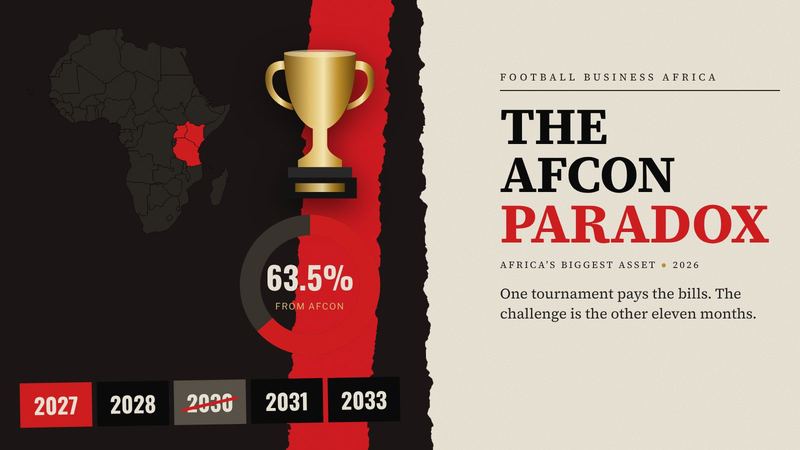
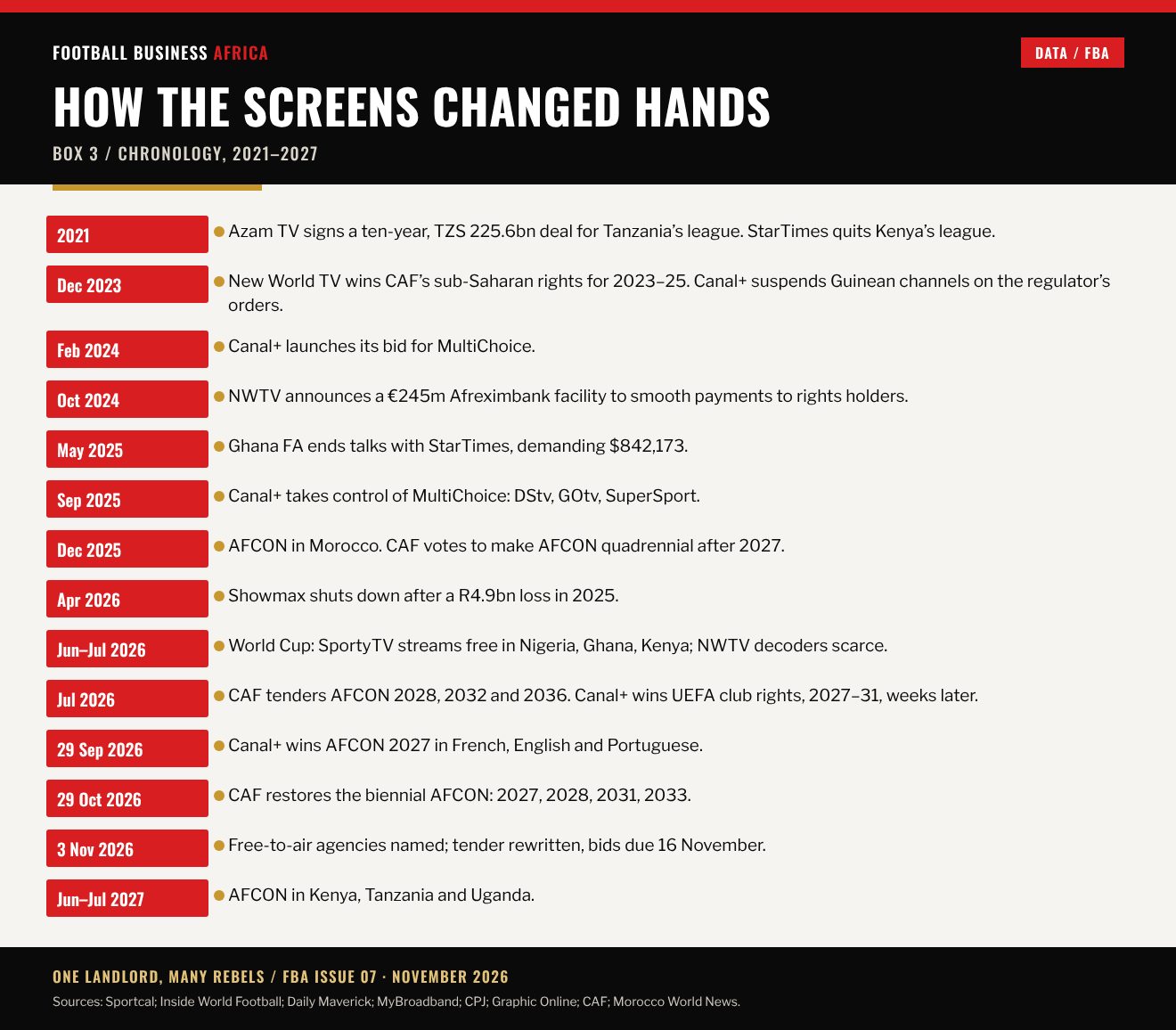
The bigger prize is the next decade. In December 2025, CAF decided to stage AFCON every four years after 2027. The decision had a price: CAF told Morocco World News that it had "fundamentally changed the value and scope" of the rights, sinking a marketing partnership reported to be worth at least $1 billion. In July 2026, CAF opened a global tender for the 2028, 2032 and 2036 tournaments. Then, on 29 October, it reversed course: AFCON will stay biennial, with editions in 2027, 2028, 2031 and 2033. The tender was rewritten accordingly, with bids due on 16 November. Whoever wins will sell Africa's flagship tournament for years, in a market that now has fewer serious buyers than ever.
That is the paradox of this moment. African football has never been more watched, at home or abroad. Its flagship has never been worth more. And yet the people who make the game, the leagues and the clubs, remain the poorest link in the chain, too often holding contracts that were signed but never fully paid.
The Bottom Line
Africa's football screens now have one landlord. Canal+ owns the main pay-TV gateway from Dakar to Cape Town, holds AFCON 2027 in three languages and Europe's club competitions until 2031. The rebels — SportyTV, Azam, public broadcasters bankrolled by their treasuries — are widening access at the edges, but none of them bids against the landlord for the continent's crown jewels.
For CAF, that means its next tender, for three AFCONs, will be tested in the thinnest market in years. For domestic leagues, it means the only real protection is the unglamorous kind: contracts in local currency or hedged against devaluation, production they control, and accounts that show where the money went.
Back in the bar, the logo in the corner of the screen will look much the same next June. What has changed is who is behind it, and how few others are left to bid against them.
Sources & further reading
- 01
The auction — Sunday Times (TimesLIVE)
SuperSport may miss out on 2027 AFCON rights: 15 bidders, a 150% rise, R105m for 2025 (anonymous source). Read the source
- 02
The winner — Sportcal
Canal+ and SuperSport add AFCON 2027 and its qualifiers, 29 September 2026. Read the source
- 03
Free-to-air — CAF via Africa Soccer
Media Experts and Media Business Solutions named for AFCON 2027, 3 November 2026. Read the source
- 04
One landlord — Daily Maverick
Canal+ seals its R55bn MultiChoice deal, September 2025. Read the source
- 05
Rights decisions move to Paris — Techweez
Canal+ pulls SuperSport rights decisions to Paris, February 2026. Read the source
- 06
Showmax closes — MyBroadband
Shut on 30 April 2026 after a R4.9bn loss in 2025. Read the source
- 07
MultiChoice FY2025 — Space in Africa
Subscribers down 1.2 million to 14.5 million. Read the source
- 08
UEFA rights — Inside World Football
Canal+ secures the Champions, Europa and Conference leagues for sub-Saharan Africa, 2027–31. Read the source
- 09
Guinea — Committee to Protect Journalists
Canal+ and StarTimes remove Guinean channels, December 2023. Read the source
- 10
Merger monitoring — BusinessDay
Competition watchdog keeps tabs on Canal+ after the merger, March 2026. Read the source
- 11
New World TV's CAF deal — Inside World Football
December 2023 agreement for 2023–25; Motsepe's 'biggest investment' quote. Read the source
- 12
NWTV's finances — Jeune Afrique via allAfrica
Creditors unpaid; Afreximbank's €245m not yet disbursed (March 2025). Read the source
- 13
World Cup 2026 in francophone Africa — Afrik-Foot
NWTV's 19-country exclusivity and the scarce decoders. Read the source
- 14
SportyTV — Inside World Football
34 free matches in Nigeria, Ghana and Kenya; all 104 on pay-TV in South Africa. Read the source
- 15
Azam TV — Sportcal
World Cup 2026 rights in eight markets. Read the source
- 16
StarTimes in Ghana — Graphic Online
GFA ends talks and demands $842,173. Read the source
- 17
The PSL's accounts — SABC Sport
R1.19bn revenue, R700m+ to clubs, R2.25m surplus in 2024/25. Read the source
- 18
Kenya's TV deal — People Daily
FKF unveils the KSh1.3bn, seven-year Azam deal. Read the source
- 19
UBC's AFCON bill — Pulse Uganda
UBC seeks UGX 32bn to broadcast AFCON 2027. Read the source
- 20
The $1bn deal that wasn't — Morocco World News
CAF abandons a commercial deal after switching AFCON to four years. Read the source
- 21
The rewritten tender — Inside World Football
CAF amends its rights tender to AFCON 2028, 2031 and 2033. Read the source
- 22
Further reading — FBA, The Battle of the Broadcasters (January 2025)
Round one of this story. Read on FBA
Dollar conversions are approximate, at the exchange rate at signing where known and otherwise at 2026 rates. Figures marked "reported" come from press reports rather than official disclosures.